
Key Takeaways
- A robust lash brand business plan is essential for transforming a passion into a profitable venture, guiding strategic decisions and attracting investment.
- It should cover Executive Summary, Market Analysis, Product Strategy, Marketing, Operations, and Financial Projections.
- Market research is crucial to identify your niche and understand competitor landscapes, ensuring your brand stands out.
- Partnering with a reliable OEM/ODM manufacturer like LashVee is key for high-quality product sourcing and customization.
- Financial projections must be realistic, detailing startup costs, revenue streams, and break-even analysis.
- This plan serves as a living document, evolving with your brand and the dynamic beauty market.
Introduction
Launching a lash brand in today’s competitive beauty market requires more than just a passion for beautiful lashes; it demands a clear vision, strategic planning, and a solid roadmap for success. A well-crafted lash brand business plan is your blueprint, transforming your entrepreneurial dreams into actionable steps. It not only helps you define your goals and strategies but also serves as a vital tool for attracting investors, securing funding, and guiding your operational decisions.
The global false eyelash market continues its upward trajectory, driven by evolving beauty trends and increasing consumer demand for diverse lash products. As we move into 2026, understanding the market dynamics and having a structured plan is more critical than ever. This guide provides a comprehensive template for your lash brand business plan, complete with examples and insights to help you build a sustainable and profitable enterprise.
Section 1: Executive Summary
The executive summary is often the first—and sometimes only—section potential investors or partners will read. It should be concise, compelling, and encapsulate your entire business plan.
Example:
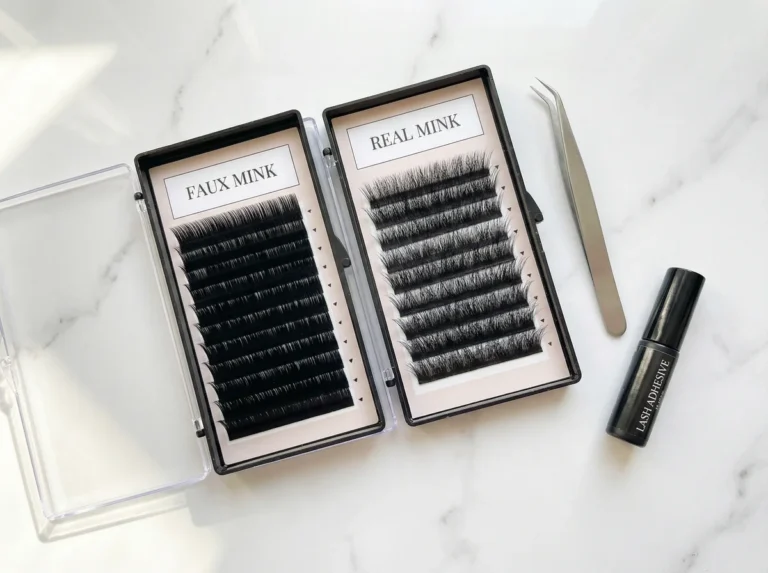
LashVee is a proposed direct-to-consumer (DTC) and wholesale lash brand specializing in high-quality, ethically sourced faux mink and silk eyelashes, alongside a curated range of lash extension products and DIY kits. Leveraging a factory-direct partnership with a leading OEM/ODM manufacturer (LashVee), we aim to offer premium products at competitive prices, targeting beauty professionals, independent lash artists, and discerning consumers. Our mission is to empower individuals and businesses to elevate their beauty offerings with superior lash solutions, supported by exceptional customer service and innovative product development. We project to achieve profitability within the first 18 months by focusing on strategic online marketing, B2B partnerships, and a scalable supply chain.
Section 2: Market & Competitor Analysis
Understanding your market is fundamental. This section details your target audience, market size, trends, and competitive landscape.
Target Demographic
Define who your ideal customer is. Are you targeting:
- Gen Z & Millennials: Often seeking trendy, cruelty-free, and affordable options.
- Luxury Market: Demanding premium materials, exquisite packaging, and unique designs.
- Beauty Professionals: Prioritizing consistent quality, reliable supply, and professional-grade products.
Market Trends (2025-2026)
Highlight current and emerging trends. For instance, the rise of DIY lash kits, sustainable packaging, and personalized lash styles are significant. LashVee closely monitors these trends, with our R&D team releasing 100+ new SKUs each season. Stay ahead by exploring the latest 2026–2027 Lash Trends.
Competitor Analysis
Identify your direct and indirect competitors. Analyze their strengths, weaknesses, pricing strategies, and marketing tactics. What makes your brand unique? This is where your Unique Selling Proposition (USP) comes into play.
SWOT Analysis
Conduct a SWOT analysis to evaluate your brand’s:
- Strengths: What advantages does your brand have? (e.g., factory-direct sourcing, unique designs).
- Weaknesses: What areas need improvement? (e.g., limited brand recognition, startup capital).
- Opportunities: What external factors can you leverage? (e.g., growing market, new social media platforms).
- Threats: What external challenges might you face? (e.g., intense competition, economic downturns).
Section 3: Product Line & Sourcing Strategy
This section outlines the products you will offer and how you will source them, emphasizing quality and reliability.
Defining Your Product Line
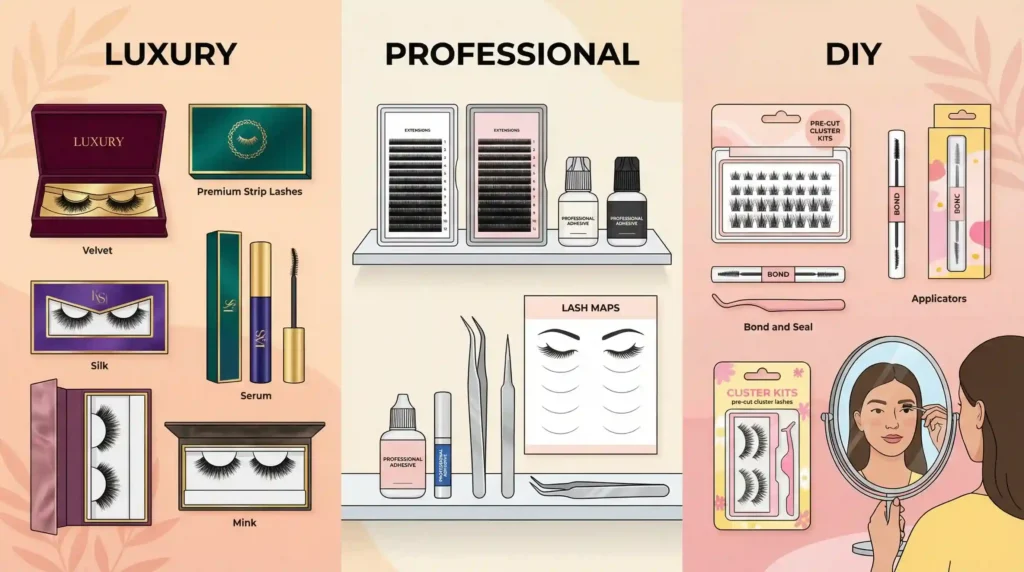
Start with a focused product offering. You don’t need to launch with hundreds of SKUs. Consider:
- Hero Products: Your flagship items that define your brand (e.g., a specific style of faux mink strip lash).
- Supporting Products: Adhesives, tools, and accessories that complement your main offerings.
- Future Expansion: Outline potential product categories for growth (e.g., colored lashes, lash serums).
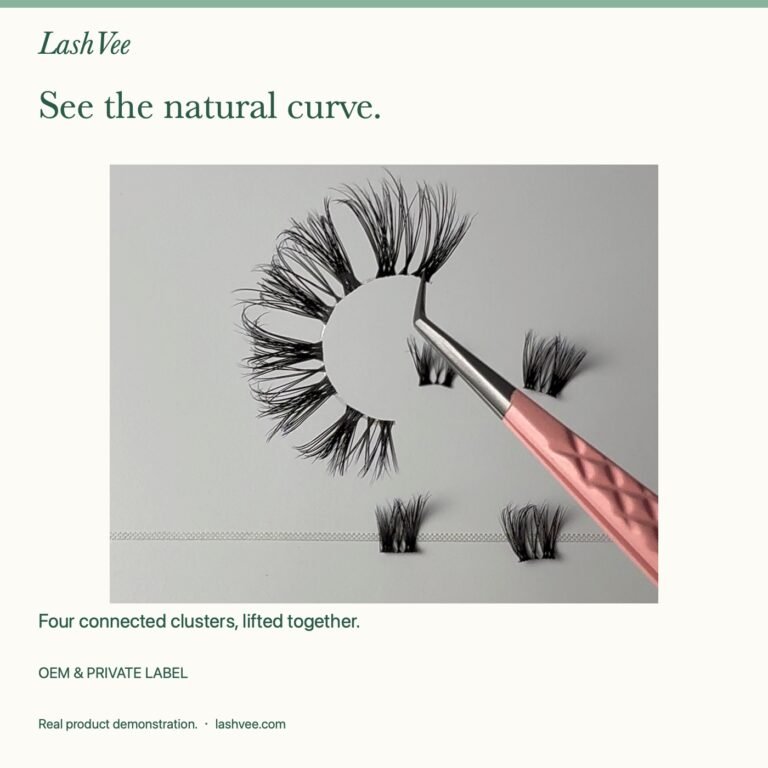
LashVee offers a diverse Lash Collection Category, including Full Strip Eyelashes, DIY Lashes & Cluster Lashes, Pre-Mapped Lashes, and Eyelash Extensions. This variety allows you to build a comprehensive product line.
Sourcing Strategy
Your sourcing strategy is critical for product quality, cost-effectiveness, and supply chain stability. Partnering with a reputable manufacturer is paramount.
“Choosing the right manufacturing partner is the foundation of your lash brand. It impacts everything from product quality and customization to lead times and cost efficiency.” – LashVee
LashVee, as a factory-direct OEM/ODM manufacturer, provides end-to-end solutions, ensuring high-quality products and flexible customization. Our guide on How to Choose a Lash Manufacturer offers essential criteria for vetting potential partners.
Section 4: Branding & Marketing Plan
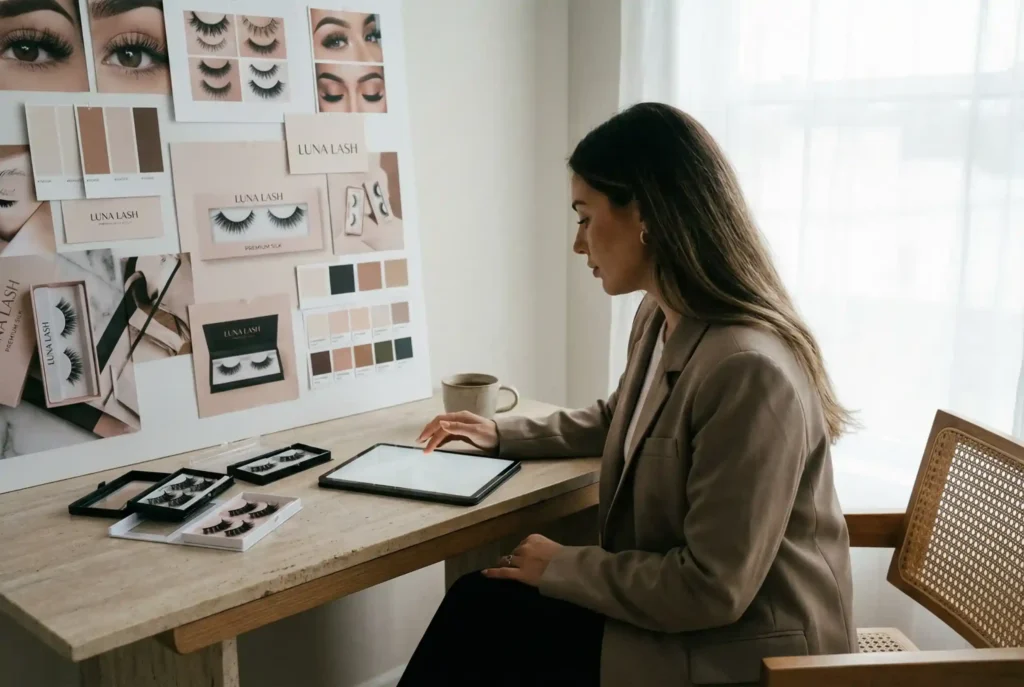
How will you present your brand to the world, and how will you reach your target customers? This section covers your brand identity and marketing strategies.
Brand Identity
- Brand Name & Logo: Memorable, relevant, and visually appealing.
- Brand Voice: Professional, luxurious, playful, educational—how do you communicate?
- Aesthetic: Color palette, typography, imagery that reflects your brand.
- Unique Selling Proposition (USP): What makes your brand different and better?
Marketing Channels
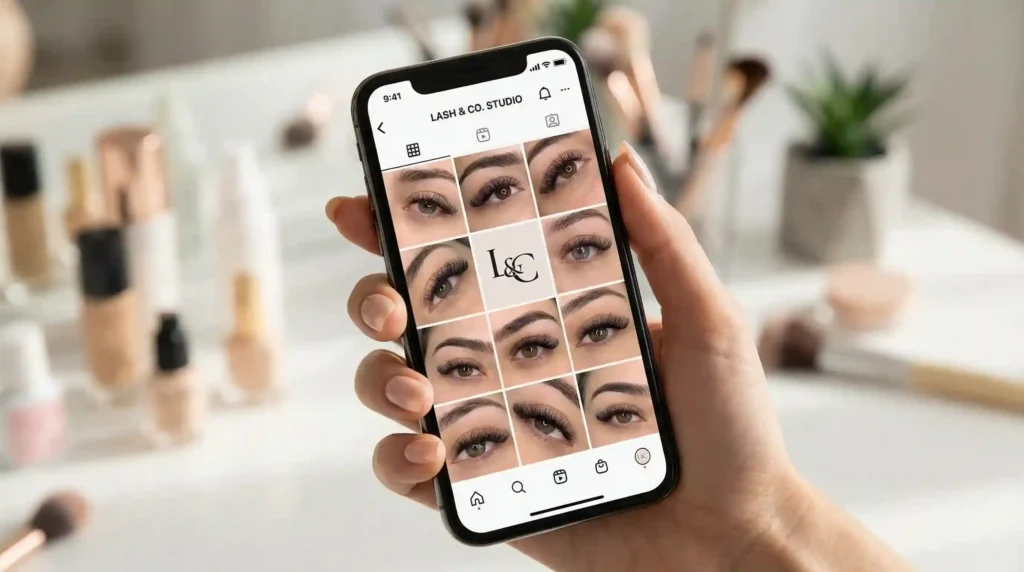
- Social Media Marketing: Instagram, TikTok, YouTube for visual content, tutorials, and influencer collaborations.
- Content Marketing: Blog posts (like this one!), guides, and educational content to establish authority and attract organic traffic.
- Email Marketing: Building a subscriber list for promotions, new product launches, and exclusive offers.
- Influencer Partnerships: Collaborating with beauty influencers to reach a wider audience.
- SEO (Search Engine Optimization): Optimizing your website and content to rank higher in search engine results.
Packaging as a Marketing Tool
Your packaging is often the first physical interaction customers have with your brand. Invest in custom packaging that reflects your brand’s quality and aesthetic. LashVee specializes in Custom Lash Packaging, offering design services and a wide range of materials to create packaging that sells.
Section 5: Operational Plan
This section details how your business will function day-to-day, covering legal structure, supply chain, and order fulfillment.
Legal Structure & Registrations
Reiterate your chosen legal structure (e.g., LLC) and confirm all necessary business registrations, licenses, and permits are in place. This ensures compliance and protects your business.
Supply Chain Management
- Manufacturer Relationship: Detail your partnership with LashVee, including communication protocols, order placement, and quality control checks.
- Lead Times: Understand and plan for manufacturing and shipping lead times (e.g., LashVee’s 20-30 day lead time).
- Minimum Order Quantities (MOQs): Outline your strategy for managing MOQs, especially for new product launches or inventory replenishment. Our Lash Brand Startup Cost & MOQ Guide provides further details.
- Inventory Management: How will you track inventory, manage stock levels, and prevent stockouts or overstocking?
Order Fulfillment
- Storage: Where will products be stored?
- Packaging & Shipping: How will orders be picked, packed, and shipped to customers?
- Customer Service: How will you handle inquiries, returns, and customer feedback?
Section 6: Financial Projections
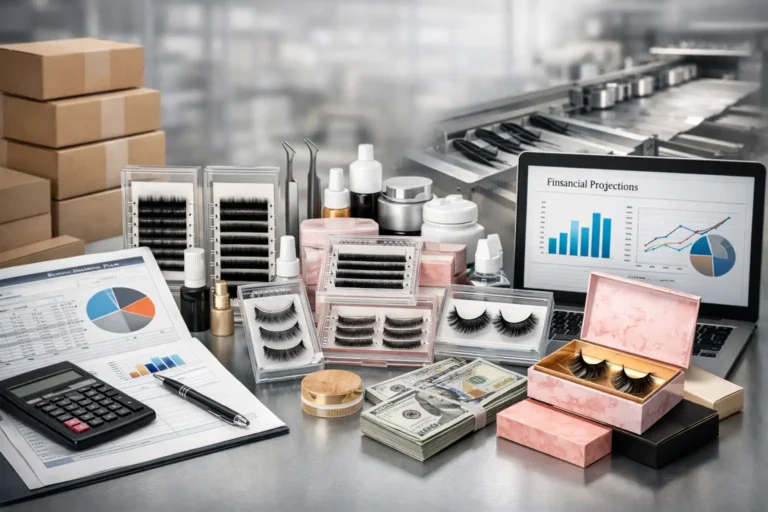
This is a critical section that demonstrates the financial viability of your lash brand. It should include startup costs, funding requests, revenue projections, and a break-even analysis.
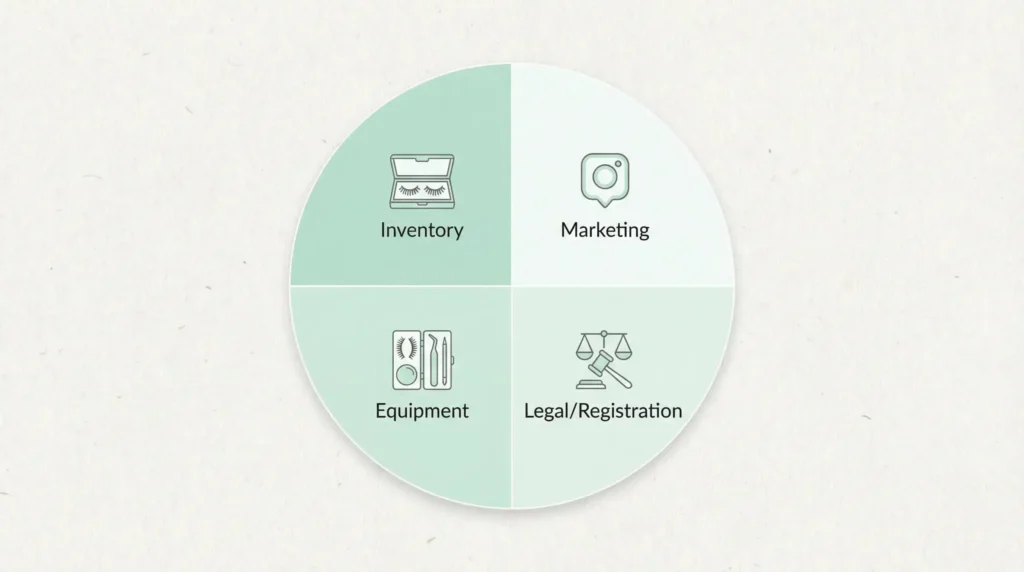
Startup Cost Breakdown
Provide a detailed breakdown of all initial expenses. This might include:
| Category | Estimated Cost Range | Notes |
|---|---|---|
| Product Inventory | $1,000 – $10,000+ | Initial MOQ orders, samples, diverse product range |
| Packaging Design | $500 – $3,000 | Logo, box design, labels, inserts |
| Website/E-commerce | $500 – $5,000 | Platform fees (Shopify), theme, app integrations |
| Legal & Registrations | $200 – $1,500 | LLC formation, business licenses, EIN |
| Marketing & Branding | $500 – $3,000 | Initial ad spend, professional photography, social media tools |
| Equipment & Tools | $100 – $500 | Basic office supplies, packing materials |
| Contingency (15-20%) | $500 – $3,000 | Unexpected expenses, cash flow buffer |
| Total Estimated Startup | $3,300 – $26,000+ | Varies significantly based on scale and product complexity |
Note: These are estimated ranges. Actual costs may vary. For a more detailed breakdown, refer to our Lash Brand Startup Cost & MOQ Guide.
Revenue Streams
Identify how your brand will generate income:
- Direct-to-Consumer (DTC) Sales: Through your e-commerce website.
- Wholesale Sales: Supplying salons, retailers, and beauty professionals.
- Subscription Boxes: Recurring revenue from curated lash product boxes.
- Services: (If applicable) Lash application services if you also operate a salon.
Financial Projections
- Sales Forecast: Project monthly and annual sales for the first 3-5 years.
- Profit & Loss Statement: Forecast your revenues, costs, and net profit.
- Cash Flow Statement: Track the movement of cash in and out of your business.
- Balance Sheet: Provide a snapshot of your assets, liabilities, and equity.
- Break-Even Analysis: Determine the point at which your total revenue equals your total costs.
Frequently Asked Questions (FAQ)
Why do I need a business plan for a lash brand?
A business plan is crucial for several reasons: it clarifies your vision and strategy, helps you identify potential challenges and opportunities, serves as a roadmap for decision-making, and is often a requirement for securing funding or loans from banks and investors. It forces you to think critically about every aspect of your business.
How much does it cost to start a lash brand in 2026?
Startup costs for a lash brand can vary significantly, typically ranging from a few thousand dollars for a small online-only venture to tens of thousands for a brand with extensive product lines and marketing. Key expenses include initial inventory, packaging design, website development, legal fees, and marketing. Our Lash Brand Startup Cost & MOQ Guide provides a detailed breakdown.
Can I start a lash business from home?
Yes, many successful lash brands start as home-based businesses, especially for online retail or wholesale models. This can significantly reduce overhead costs. However, you must still comply with all local business registration, licensing, and zoning regulations. Ensure you have a dedicated workspace and proper storage for your products.
How important is a manufacturer like LashVee in my business plan?
Partnering with a reliable manufacturer like LashVee is incredibly important. A factory-direct OEM/ODM partner ensures consistent product quality, offers extensive customization options, provides competitive pricing by cutting out middlemen, and supports your brand’s growth with R&D and scalable production. This partnership is a cornerstone of your product strategy and operational efficiency.
Conclusion
Developing a comprehensive business plan is an indispensable step in launching a successful lash brand. It provides clarity, direction, and a solid foundation for growth in the dynamic beauty industry. By meticulously outlining your executive summary, market analysis, product and sourcing strategies, marketing efforts, operational framework, and financial projections, you equip your brand for long-term success.
LashVee is committed to being your trusted partner throughout this journey. Our expertise in OEM/ODM manufacturing, custom packaging, and diverse lash product development can transform your business plan into a thriving reality. We invite you to leverage our 15+ years of experience to build a lash brand that truly stands out.
References
[1] Grand View Research. (2021). False Eyelashes Market Size, Share & Trends Analysis Report By Product (Strip, Individual, Cluster), By Material (Synthetic, Natural), By Distribution Channel, By Region, And Segment Forecasts, 2021 – 2028. https://www.grandviewresearch.com/industry-analysis/false-eyelashes-market
[2] U.S. Small Business Administration. (n.d.). Starting a Business. https://www.sba.gov/business-guide/10-steps-start-your-business
[3] Stripe. (2025). How to start a lash business: A guide for entrepreneurs. https://stripe.com/ae/resources/more/how-to-start-a-lash-business
[4] Financial Models Lab. (2025). Eyelash Extension Salon Business Plan: 7 Steps. http://financialmodelslab.com/blogs/write-business-plan/eyelash-extension