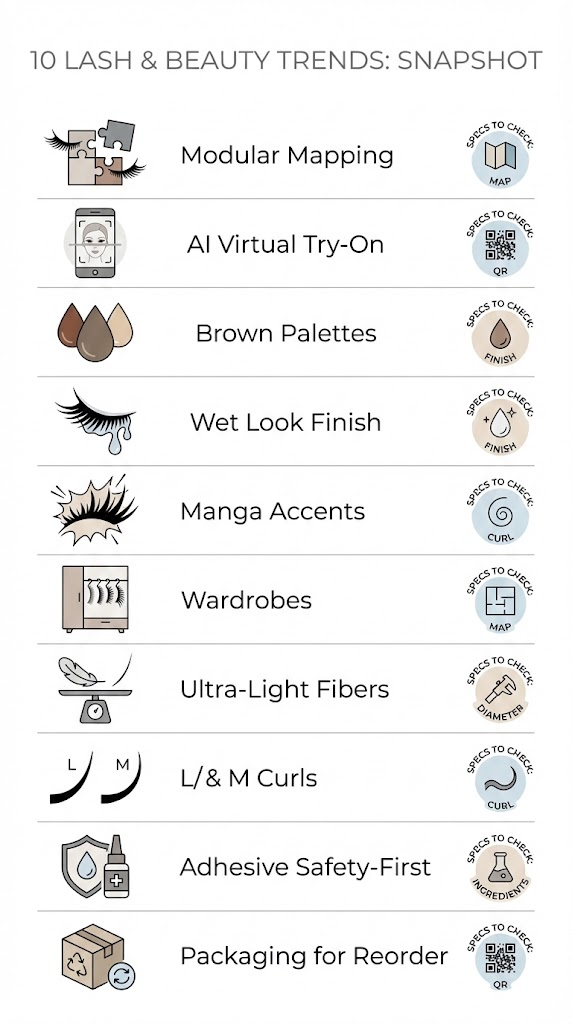
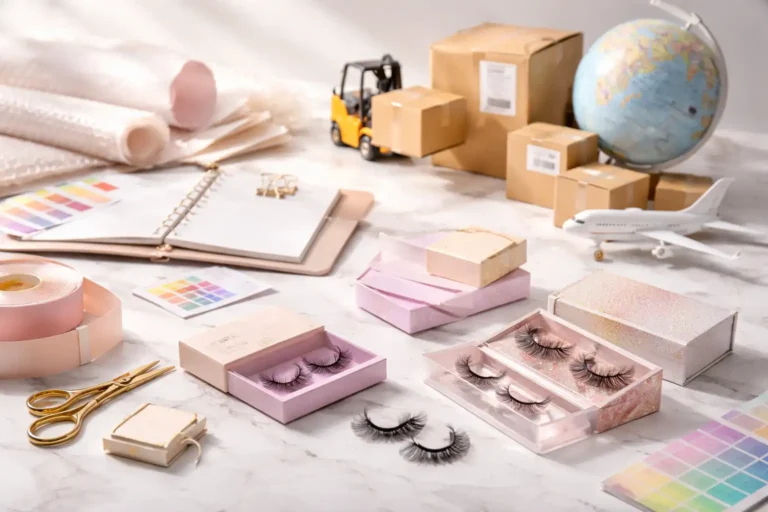
In 2026–2027, “personalized lashes” means a formula—mapping + curl + fiber/weight + color/finish + comfort—matched to eye shape and routine. This guide breaks down the top 10 trends (brown palettes, wet look, manga accents, L/M curls, smarter adhesives) and ends with a fast “choose-your-formula” checklist.
2026–2027 Personalized Lash Trends
One-sentence answer
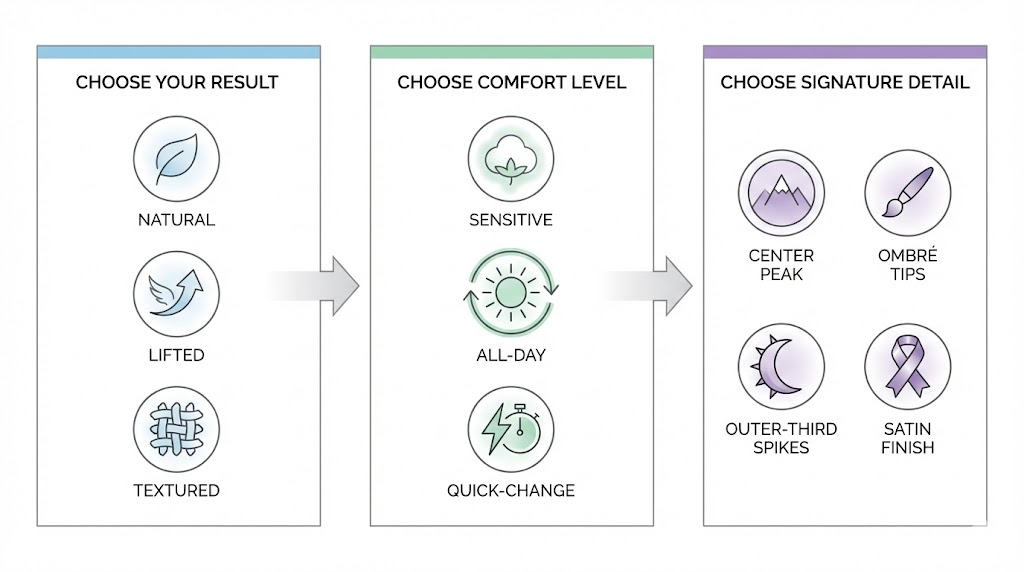
In 2026–2027, personalized lashes shift from “pick a style” to a repeatable formula: mapping + curl + fiber/weight + color/finish + application method—matched to eye shape, comfort tolerance, and daily routine.
The biggest winners are modular mapping, softer palettes (brown/soft-black), wearable texture (wet/wispy/manga accents), and clearer safety + spec consistency.
Key takeaways (scan in 10 seconds)
Personalization = formula-based (mapping + specs), not one viral look
Brown/soft-black + matte/satin reads “custom” on more faces
Wet look + manga spikes stay—but become lighter, more wearable, more modular
L/M curls rise for hooded/deep-set eyes (lift without eating lid space)
Lifestyle fit: long-wear vs. quick-change; gym-proof vs. minimal maintenance; “everyday office” vs. “event lashes.”
Comfort fit: lighter fibers, better weight distribution, gentler wear routines, and clearer ingredient transparency—especially for sensitive eyes.
Definitions and scope
Personalized lashes (in this article): A repeatable “formula” based on mapping, curl, fiber/diameter, texture, color/finish, and application method, chosen to fit eye shape + lifestyle + comfort needs.
Forecast vs. observation:
Observed: what’s increasingly common in product design and buying behavior
Forecast: what’s likely to expand through 2027 based on current direction
Audience: consumers, artists, and private label/OEM operators (sections are labeled).
Citation note: “Factory insight” statements reflect operational observations (ordering/QC/packaging patterns) and should be cited as industry observation, not clinical guidance.
Choose your lash formula (fast decision table)
Your goal
Mapping default
Curl default
Color default
Texture default
Comfort priority
Natural enhancement
balanced open / inner-corner bright
C/CC
brown / soft-black
wispy classic
ultra-light fibers
Lifted glam
lifted outer corner / soft fox
L or M (for hooded/deep-set)
soft-black
wispy layered
stable curl retention
Textured statement
modular map + topper row
CC/L/M
black or brown-black
wet-look / selective spikes
lower diameter / spacing
The 10 trends shaping personalized eyelashes (2026–2027)
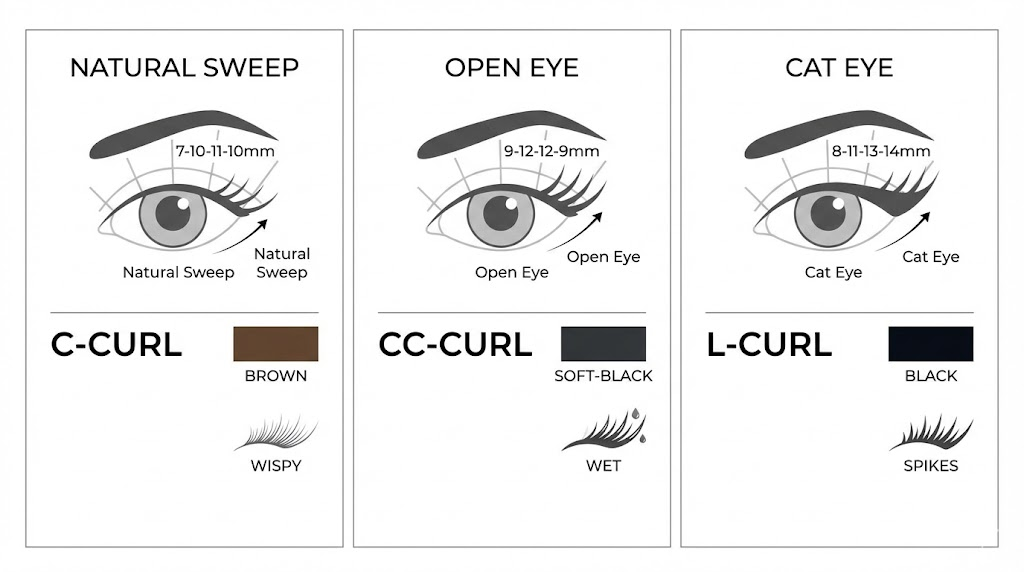
1) Mapping menus become modular (micro-adjustments win)
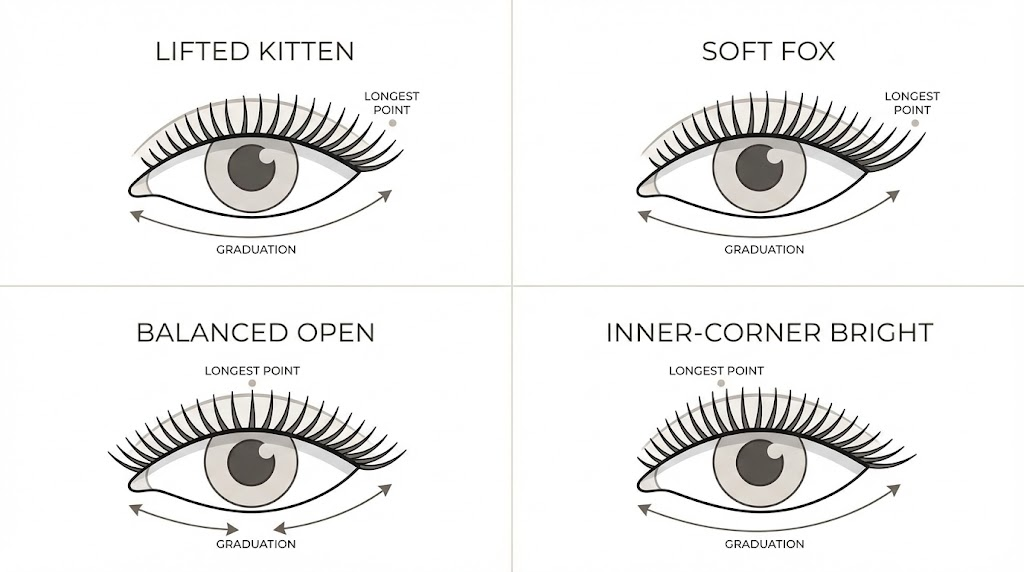
Claim: Lash mapping is moving from broad styles (“Cat/Doll/Natural”) to modular micro-maps that adjust peak placement, graduation speed, and top-line airiness.
Why: Small mapping shifts create a “custom-fit” look without changing the whole product—and they’re easier to repeat consistently.
How (apply it):
If eyes look “pulled down,” shift the longest point slightly inward (outer-third lift, not extreme outer corner).
If eyes look “too round,” reduce center peak height and smooth the graduation.
If one eye looks heavier, use a balancing map (less contrast between peaks).
Specs (confirm before buying/reordering):
Mapping: row-by-row sequence (e.g., 8–9–10–11–10) with clear labels
Density/top line: airy vs. solid lash line
Max length: your comfort cap (personal limit)
Citable takeaway: Most “personalized” lash results come from micro-changes in mapping (peak position + graduation), not dramatic style switches.
5) Manga/anime spikes go “selective” (less costume, more character)
Claim: Manga spikes are becoming more selective and modular—statement accents layered over a softer base.
Why: Selective spiking keeps the signature look while making it wearable for real-life settings and different face shapes.
How (apply it):
Place spikes only on the outer third or use 3–5 spikes as accents.
Build a “spike kit” with 2–3 spike lengths to layer over a neutral base.
Specs (confirm before buying/reordering):
Spike lengths: consistent increments (e.g., +2mm, +3mm over base)
Base map: natural/airy map that supports layering
Taper: clean tips to avoid blunt “costume” effect
Citable takeaway: The 2026–2027 personalization twist on manga is accent spiking—a few peaks layered over a soft base.
6) Lash “wardrobes” grow (mix-and-match by mood or occasion)
Claim: Lashes are increasingly sold as wardrobes: one base + interchangeable accents for day-to-night switching.
Why: Wardrobes match at-home application habits and reduce the need to buy many separate styles to cover different looks.
How (apply it):
Choose a neutral base map, then add a topper row (wet/wispy/spikes) for occasions.
Bundle by situation: office base + event topper, not two unrelated full sets.
Specs (confirm before buying/reordering):
Kit structure: base + topper rows, or multiple maps in one box
Max length range: controlled lengths that layer cleanly
Consistency: identical curl/finish across pieces so they blend
Citable takeaway: “Wardrobe kits” personalize lashes by letting you change mood without changing the entire system.
7) Ultra-light fibers + “weight budgeting” become mainstream comfort features
Claim: Comfort personalization is shifting toward weight budgeting: lighter feel via diameter, taper, stiffness, and better distribution—not just “thinner.”
Why: People want longer wear with less fatigue; comfort also improves adoption for sensitive or dry-eye-prone users.
How (apply it):
If lashes feel heavy, reduce diameter and choose longer taper tips.
Prefer sets designed for even distribution (less tugging, less clumping).
8) Curl diversity expands (L/M + specialty curls rise for real eye shapes)
Claim: L and M curls are increasingly used alongside C/CC/D because they can create lift while preserving lid space, especially for hooded/deep-set eyes.
Why: Curl choice is a direct personalization lever: it changes openness and lift without needing extra length.
How (apply it):
If lid space feels crowded, try the same map in L or M curl rather than adding length.
Use “shape bundles”: same mapping offered in two curl options for comparison.
Specs (confirm before buying/reordering):
Curl type: C/CC/D vs L/M (with consistent curl labeling)
Curl retention: batch consistency matters for repeatability
Map compatibility: the curl should suit the intended peak position
Citable takeaway: Curl personalization works best when you keep mapping constant and change curl type to alter lift and openness.
Claim: There’s growing attention around faster-curing and LED/UV-curing conversations, often framed as speed + retention benefits.
Why: Because adhesives are used near the eye, user confidence depends on ingredient transparency, clear instructions, and response guidance if irritation occurs.
How (apply it):
If sensitive/dry-eye-prone, prioritize conservative routines and clearly disclosed ingredients.
Choose systems that explain intended use, removal, and what to do if discomfort occurs.
Specs (confirm before buying/reordering):
Adhesive type: wear duration + removal method
Ingredient disclosure: allergens and key components
Usage requirements: professional training vs consumer-friendly routine
Citable takeaway: Adhesive innovation supports personalization only when paired with clear ingredients, instructions, and safety-first guidance.
10) Packaging becomes part of personalization (scan, match, reorder)
Claim: Packaging is becoming a “personal stylist”: QR guides, mapping diagrams, and clear icons that help users match, learn, and reorder the same look.
Why: Personalization collapses if customers can’t recreate the result—packaging reduces confusion, returns, and inconsistent repurchases.
How (apply it):
Use packaging to answer in 5 seconds: vibe, who it flatters, map, max length, shade, and reorder ID.
Add a scannable mapping diagram or quick “choose your formula” guide.
Specs (confirm before buying/reordering):
Labeling: curl/diameter/map/finish icons
Traceability: batch/lot identifiers for QC consistency
Instruction clarity: simple use + care steps matched to product type
Citable takeaway: In 2026–2027, packaging is part of personalization because it enables fast matching and reliable reordering.
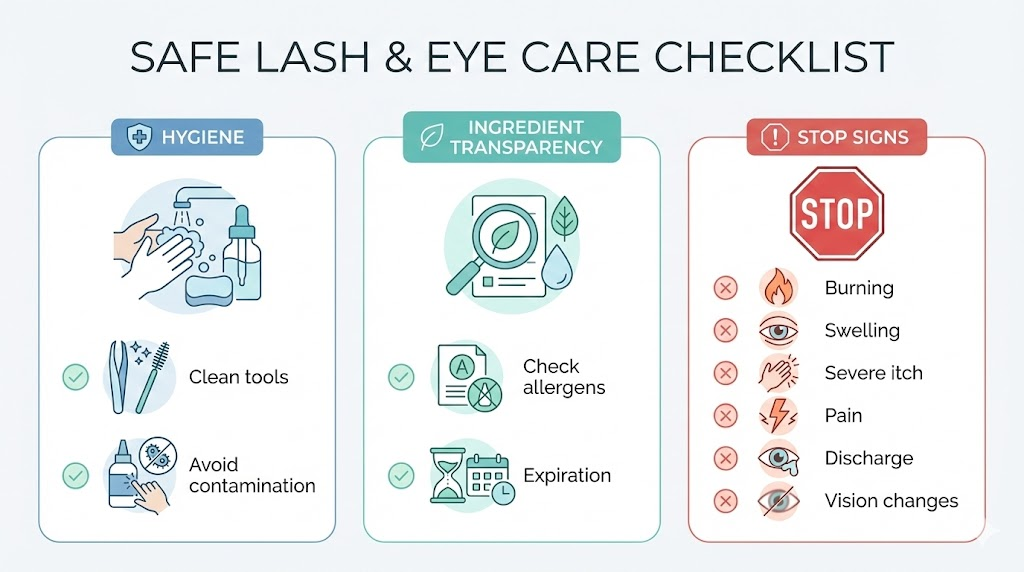
Personalization should never outrun eye safety. Because lashes and adhesives are used close to the eye, hygiene, ingredient transparency, and “stop signs” matter more than trendiness.
If you’re getting extensions or professional application:
Ask what training/certification the practitioner has, and ask for the adhesive’s ingredient list so you can check known allergens.
Confirm the adhesive is within its expiration date.
Request a spot test (AAO suggests a test on the inside of the wrist before glue is applied near the eye).
If you’re doing at-home strips/clusters:
Keep products and tools clean and avoid practices that increase contamination risk; FDA notes eye cosmetics are usually safe, but misuse can allow bacteria/fungi to grow, increasing infection risk.
If any eye product causes irritation, stop using it immediately; if irritation persists, see a doctor (FDA consumer safety guidance).
“Stop and reassess” symptoms (don’t push through these)
Stop using the product and get professional guidance if you experience burning, swelling, significant itching, pain, unusual tearing/discharge, or any vision changes—especially because problems near the eye can worsen quickly. FDA advises stopping use if irritation occurs and seeing a doctor if it persists.
If you have an allergic reaction to extensions, the AAO specifically advises not trying to remove them yourself and not trying to treat the reaction on your own.
Adhesive transparency (what “formaldehyde-free” may not guarantee)
Some adhesives marketed as “formaldehyde-free” may still be associated with formaldehyde presence/release under testing methods—one peer-reviewed study analyzed multiple commercially available eyelash glues marketed as formaldehyde-free and investigated formaldehyde presence.
Practical takeaway for readers: treat “formaldehyde-free” as a starting point, not a full safety guarantee—prioritize full ingredient disclosure, reputable sourcing, and patch/spot testing when appropriate.
UV/LED-curing lash systems (how to message responsibly)
UV/LED-curing systems are often marketed for speed and retention, but peer-reviewed commentary has highlighted that the process raises meaningful safety considerations, given light exposure near delicate eye tissues.
If you mention UV/LED systems, include guardrails: emphasize practitioner training, appropriate shielding/eye protection, and that anyone with eye conditions or a history of reactions should take extra caution and consider professional medical advice.
Medical note: This article shares general, evidence-informed safety information. It isn’t medical advice. If symptoms are severe (pain, swelling, discharge, or vision changes), stop use and seek care promptly.
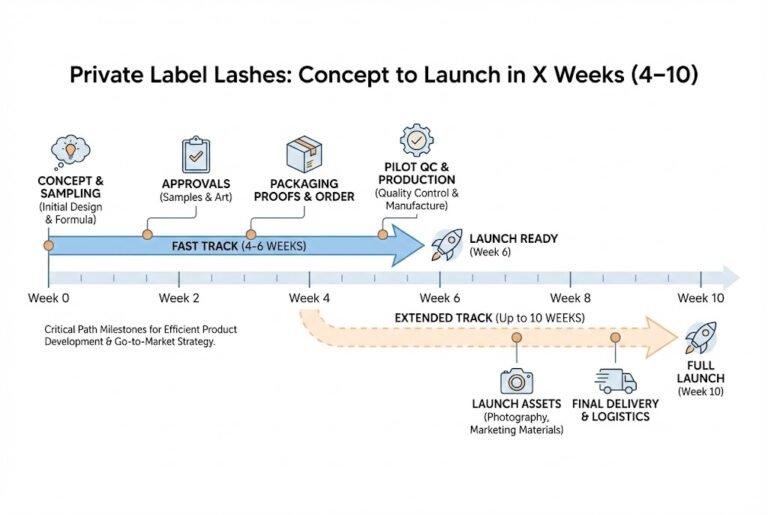
What these trends mean for private label & OEM launches
If you’re building (or refreshing) a personalized lash line for 2026–2027, here’s what we’d prioritize.
1) Launch smaller, iterate faster
Trend cycles are moving quickly. The brands that win usually release tight capsules (6–12 SKUs) with clear personalization logic:
2–3 everyday naturals (including brown)
2–3 lifted/flattering maps (same map, different curl options)
2–3 textured statements (wet + selective spikes)
Low MOQ makes this approach realistic without overstock pressure.
2) Make QC a selling point (quietly, but clearly)
Personalization collapses if the “same style” looks different every reorder. Practical QC checks we recommend:
curl verification (random sampling per batch)
taper and tip consistency
fiber finish control (matte vs gloss)
tray alignment (reduces tangles and application time)
3) Let packaging do the “personal stylist” job
Your box should answer in 5 seconds:
What vibe is this?
Who does it flatter?
What’s the map and max length?
Is it soft-black or brown?
How do I reorder the same look?
That’s not marketing fluff—it reduces returns and increases reorders.
4) Don’t chase tech without training
If you explore LED/UV-curing systems or new adhesive approaches, build your rollout around education, compliance, and safety-first messaging. Personalization should feel more reassuring, not more confusing.
Key Points
Personalization in 2026–2027 means formula-based lashes, not one-size trends.
Mapping is becoming more modular and specific (micro-lift, balanced open, soft fox).
AI/AR try-ons are accelerating product discovery and narrowing choice faster.
Browns and softer blacks keep expanding, especially matte/satin finishes.
Wet-look and manga-inspired textures remain, but with wearable customization.
Curl diversity grows (L/M and specialty curls for real-life eye shapes).
Packaging and QR education are becoming part of the personalization experience.
For OEM/private label, spec consistency + low MOQ iteration is the competitive edge.
FAQ
Are personalized lashes only for extensions?
No—personalization applies to clusters, strips, and extensions. The difference is how you personalize: mapping and weight distribution matter more for extensions; quick-change “wardrobes” are huge in clusters.
Will brown lashes replace black?
Black stays, but brown is now a core option because it instantly looks more tailored on many people—especially for daytime and soft-glam.
What’s the safest way to test a new lash adhesive?
The AAO advises asking for the adhesive’s ingredient list to check allergens, confirming it’s not expired, and requesting a spot test (e.g., on the inside of the wrist) before adhesive is used near the eyes. If you develop signs of an allergic reaction, the AAO advises not removing extensions yourself and seeking professional care rather than self-treating.
What’s one trend that’s “quietly huge” for 2027?
Reorderability: the ability to get the exact same look again (same curl, finish, and mapping) without gambling on batch variation.
Conclusion
2026–2027 personalized eyelashes aren’t “one trend”—they’re a repeatable lash formula you can tailor and reliably reproduce: mapping + curl + fiber/weight + color/finish + application method, matched to real eye shapes, routines, and sensitivity.
If you’re building a line (private label/OEM): the winners will ship personalization that’s easy to choose and easy to reorder.
Launch a tight modular assortment (6–12 SKUs): everyday naturals (include brown/soft-black), flattering maps in multiple curls, and wearable texture toppers.
Make spec consistency (curl retention, taper/finish control, batch repeatability) part of your product promise.
Let packaging act like a mini consultant: clear spec icons, mapping diagrams, and QR education that helps shoppers self-select quickly—because packaging design and information cues measurably influence how people perceive quality/safety/value and whether they buy.
Citable takeaway: In 2026–2027, the most “personalized” lash look is the one you can match to your eye shape + comfort tolerance + daily routine—and reproduce consistently.
Ready to ship exactly these formulas with full customization, low MOQ, and 95%+ reorder rate? Get Your LashVee Quote
At LashVee, we help lash brands and professional buyers avoid common sourcing mistakes—from inconsistent curl and fiber quality to unstable band bonding in mass production. Our work focuses on translating design intent into repeatable, production-ready lash styles.
If you’re evaluating suppliers, refining a lash design, or planning a private label order, we’re happy to share practical input or provide samples to support your decision.
At LashVee, we help lash brands and professional buyers avoid common sourcing mistakes—from inconsistent curl and fiber quality to unstable band bonding in mass production. Our work focuses on translating design intent into repeatable, production-ready lash styles.
If you’re evaluating suppliers, refining a lash design, or planning a private label order, we’re happy to share practical input or provide samples to support your decision.