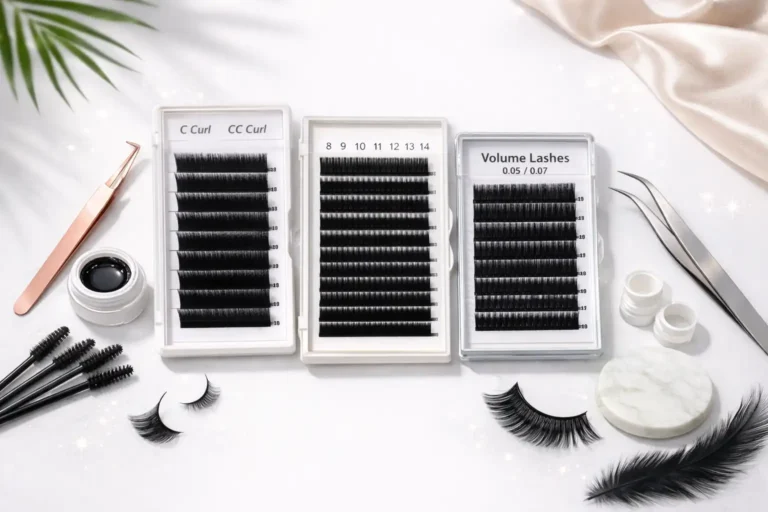
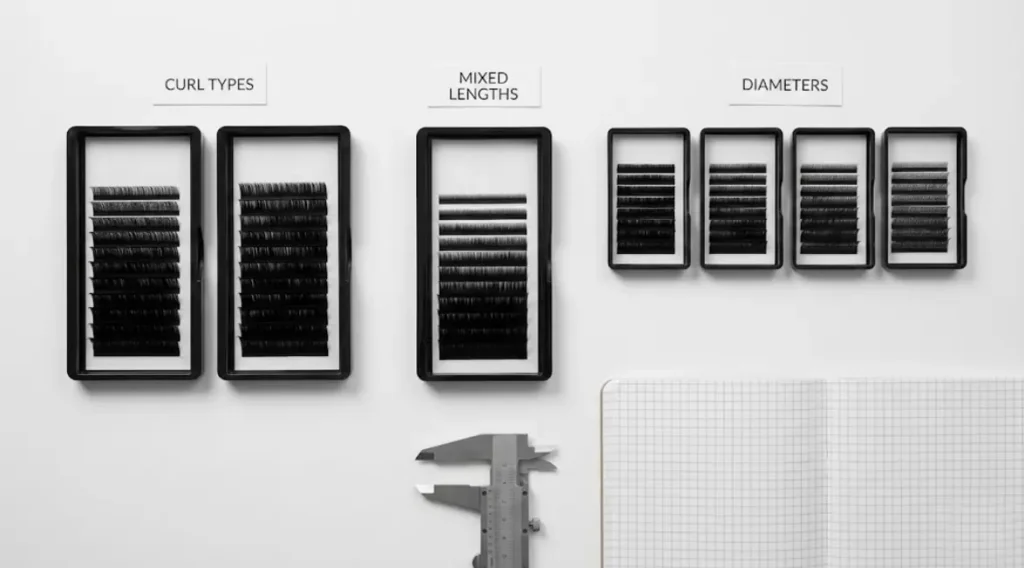
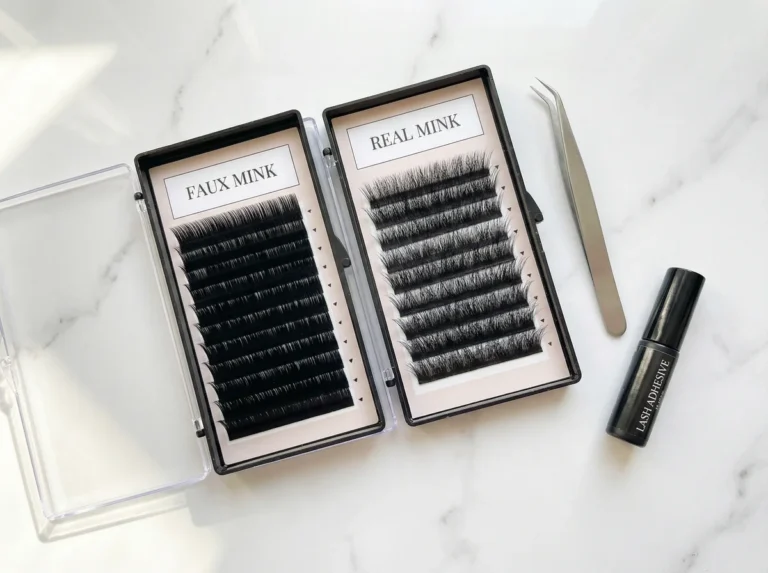
Start with 2 curls, 1 mixed length range, and 2 diameters per line:
Curls:C + CC (or C + D in glam-heavy markets)
Lengths:8–14mm mixed (add 7mm + 15–16mm later only if demanded)
Classic diameters:0.12 + 0.15
Volume diameters:0.05 + 0.07 Then expand using reorder data: single-length refills (often 11–12mm) + one specialty curl (often L).
Pick your starter lineup by buyer type
Quick Picks: Starter Lineup by Buyer Type
Buyer type
Best starter curls
Best starter lengths
Best starter diameters
Add later (only if demand)
Salon owner (general clientele)
C + CC
8–14mm mixed
Classic 0.12/0.15 + Volume 0.05/0.07
L curl, 0.10 classic, 11–12mm refills
Wholesaler (multiple salons)
C + CC + D
8–14 mixed + key singles 10–13
Classic 0.12/0.15 + Volume 0.05/0.07
B curl, 0.03, specialty colors
Brand owner (signature look)
C + CC (keep tight)
8–14 mixed
“Soft luxury”: Classic 0.12 + Volume 0.05
Matte/brown, L curl, curated bundles
Quick Picks: Starter Lineup by Look
Desired look
Recommended curls
Length mix
Diameter guidance
Natural / office-friendly
B or C
8–12 (or 8–14)
Classic 0.12 (or 0.10 later), Volume 0.07
Everyday lifted
C + CC
8–14
Classic 0.12/0.15, Volume 0.05/0.07
Glam / open-eye
CC or D
9–15 (market dependent)
Classic 0.15, Volume 0.05/0.07
Foxy / liner effect
L or M (often with C inner)
8–14
Keep weight conservative; Volume 0.05/0.07
Introduction
Building a lash line is mostly about choosing the right curl, length, and diameter—without creating SKU chaos. This cheat sheet gives you:
a simple way to pick a starter lineup that sells
the core specs most salons reorder
a phase-based expansion plan (what to add only after demand proves it)
If you’re launching Classic, Hybrid, or Volume, use the Quick Picks above to decide fast—then use the rest of the guide to double-check the “why.”
We’ll also cover how to translate these specs into a lean starter SKU list—and what quality checks matter so your line stays consistent.
The “Triad” Buyers Should Think In: Look, Ease, Safety Margin
When buyers choose curl, length, and diameter, they’re rarely “shopping specs.” They’re trying to balance three outcomes—and the best product lines make that balance obvious and easy to repeat.
Look (result)
Look is the finished style on the eye: natural, lifted, open-eye, bold, foxy/liner effect, doll-eye, etc. Eyelash extensions are popular largely because they can enhance aesthetic appearance and deliver a “natural look” when chosen and applied well.
What this means for your lineup: Your core specs should map cleanly to a few high-demand looks (instead of trying to cover every style on day one).
Ease (application)
Ease is how forgiving the lash is for most trained artists: isolation, placement accuracy, fan control (for volume), styling speed, and consistency across sets. In practice, “ease” is heavily affected by application technique and material/adhesive behavior (e.g., working time/drying time), which is why literature reviews on extensions repeatedly emphasize methods, professional technique, and hygiene/training as part of safe, consistent results.
What this means for your lineup: Prioritize specs that most artists can place quickly and repeatably—because “hard-to-work-with” SKUs create more errors, slower sets, and more complaints.
Safety margin (wearability)
Safety margin is the “wearability buffer”: what tends to stay comfortable and low-risk for most clients when applied correctly. Extensions have been associated with multiple ocular and eyelid complications (examples include allergic blepharitis, keratoconjunctivitis, conjunctival injury/erosion, and traction-related lash issues), so your safest commercial wins are specs that deliver the look without pushing weight/irritation risk.
Evidence also points to adhesives and chemical exposure as a meaningful risk area; for example, formaldehyde release has been detected in analyses of some extension glues, and ocular disorders have been reported in connection with extension procedures—supporting the need for careful product selection, hygiene, and practitioner knowledge.
Regulatorily, FDA treats false lashes/extensions and their adhesives as cosmetics and emphasizes safety/labeling responsibilities, which is another reason “wearability” should be part of how buyers evaluate a product line—not an afterthought.
How to use this triad (fast)
When choosing (or designing) specs, ask these three questions in order:
Look:What style does my customer actually sell most?
Ease:Can most artists apply this quickly and consistently?
Safety margin:Does this stay comfortable and wearable for most clients when applied correctly (weight, irritation risk, adhesive sensitivity)?
Rule of thumb: the “perfect photo spec” is rarely the best core SKU. If it’s harder to place or less wearable, it becomes niche inventory—great as a Phase 2 add-on, risky as a launch foundation.
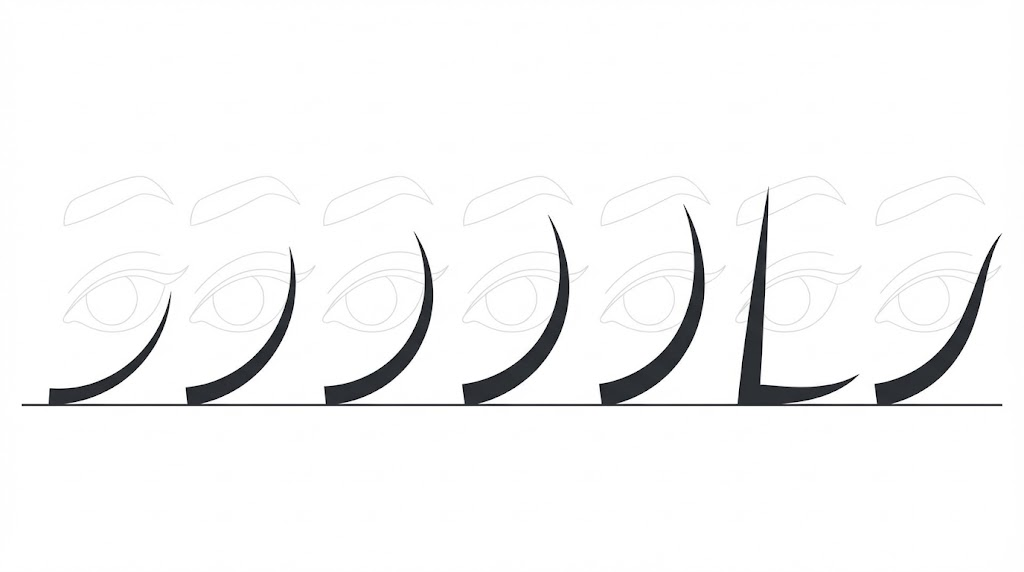
Curl: The “Shape Language” of Your Line
Curl is usually the first thing artists notice because it sets the vibe: soft, open, lifted, or dramatic.
Common curl types (and what they’re best for)
J / B Curl: subtle lift, very “natural lash” look
Great for: mature clients, straighter natural lashes, understated sets, markets that prefer natural styles
C Curl: the universal workhorse
Great for: most clients, classic + hybrid bestsellers
CC / D Curl: higher lift and more visible curl
Great for: “open eye,” glamour, photo-ready looks, clients who love noticeable lash lines
L / M Curl: straighter base with a strong lift (especially L)
Great for: downward-growing lashes, sharper “foxy” styling, liner effect
Buyer tip: If you’re building a first product line, we usually recommend starting with C + CC (or C + D, depending on your market). That gives artists enough range without complicating inventory.
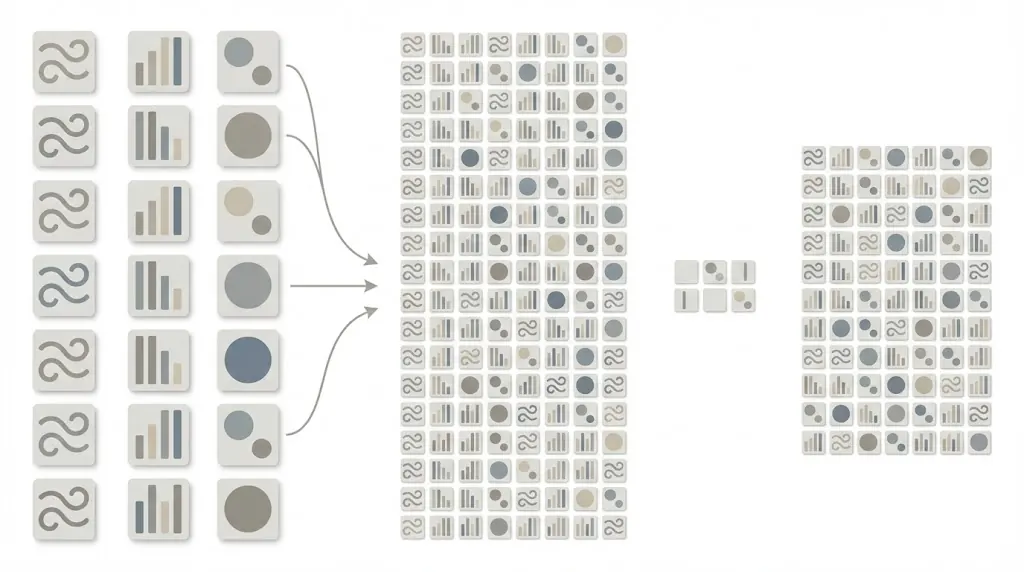
Curl impacts your SKU count more than you think
Each curl you add multiplies your lengths and diameters. If you offer:
Buyer tip: If you want a clean first launch, we often recommend:
8–14mm as your core range Then add 7mm and 15–16mm only if your customers ask.
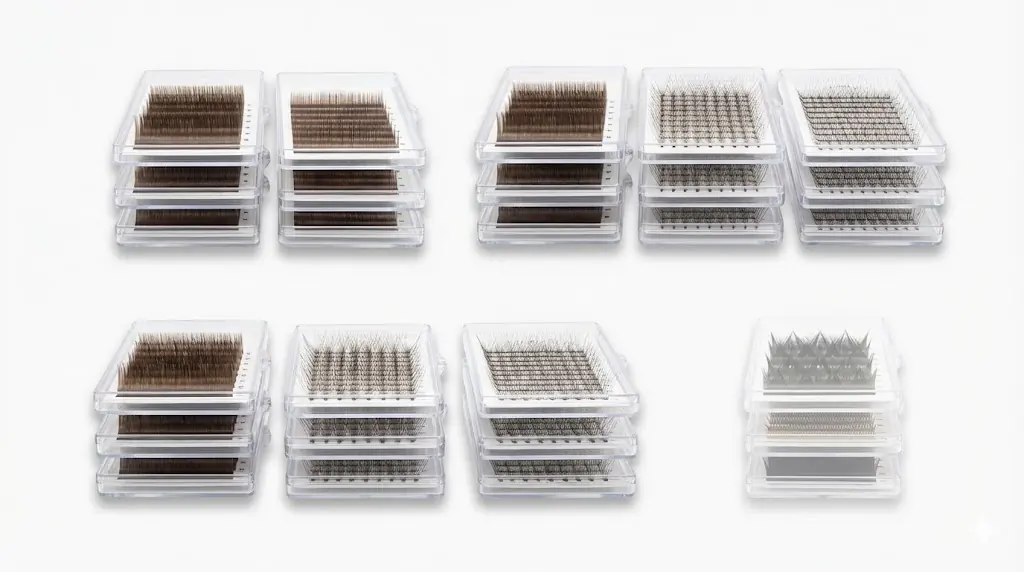
Mixed trays vs single-length trays: how buyers decide
Mixed trays (e.g., 8–14mm) are best for:
new brands
retail simplicity
salon restocking convenience
Single-length trays are best for:
high-volume salons
wholesalers supplying pros who already know their numbers
advanced stylists who burn through specific lengths (like 11–12mm)
A common strategy: launch with mixed trays first, then add single-length “refill” trays for bestsellers once you know what moves.
Mapping-friendly length sets (simple and sellable)
If you want your trays to support popular mapping styles, these are clean, intuitive mixes:
8–14mm (classic universal)
9–15mm (for markets that prefer longer sets)
8–12mm (natural / short-focused)
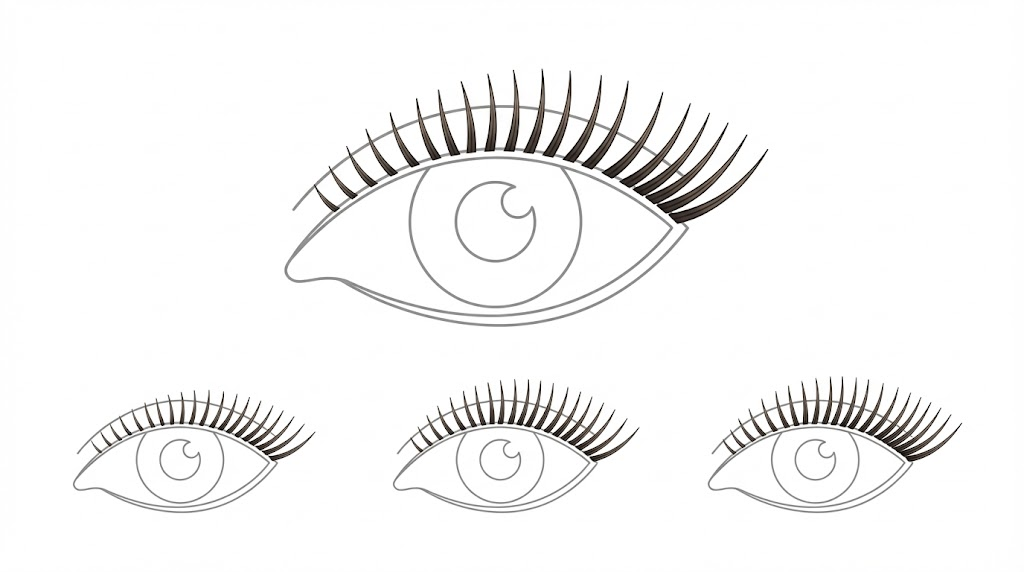
Thickness (Diameter): Where Buyers Win or Lose Client Comfort
“Thickness” in lash buying usually means diameter (mm). This spec affects:
weight on the natural lash
softness/feel
density of the final look
how forgiving the lash is to apply
Common diameter ranges (extensions)
You’ll see these frequently:
Classic lash diameters
0.10 / 0.12 / 0.15 mm: core classic range
0.18 / 0.20 mm: bolder classic (often more niche)
Volume lash diameters
0.03 / 0.05 / 0.07 mm: core volume range
0.02 mm: very light, mega-volume territory (more advanced)
Buyer tip: If your line targets a broad market, a very practical starter set is:
Classic: 0.12 + 0.15
Volume: 0.05 + 0.07 This covers a huge portion of everyday demand.
How diameter changes the “look”
Thicker diameter = stronger, darker lash line per lash
Thinner diameter = softer, fluffier texture (especially in fans)
So if your brand aesthetic is “soft luxury,” your diameter choices matter as much as your curl.
What to stock first (by audience)
Salon owners (general clientele): prioritize forgiving, versatile diameters
Wholesalers: offer breadth, but lead with fast movers
Brand owners (DTC or pro-focused): align diameters to your signature look
Private Label / OEM: how to keep your line consistent
If you’re building a branded lash range, your specs only matter if they’re repeatable. Before you finalize your catalog, align with your manufacturer on:
Building Product Lines: What to Offer (and What to Skip at Launch)
Use this rule to stay lean and buyer-friendly: launch an MVP assortment (few, high-clarity options), learn from reorder behavior, then expand only where demand proves it.
Too many near-duplicate options can slow decisions (“choice overload”), while extra SKUs add real operational cost/complexity.
Catalog Blueprint (one-screen starter plan)
Product line
Launch (core spec set)
Add later (only when demand proves it)
Skip at launch (most brands don’t need this early)
Classic (foundation)
C + CC curls; 8–14mm mixed; 0.12 + 0.15
Add B curl for ultra-natural looks; add 7mm / 15mm; add 0.10 for softer classics
Extra curls beyond 2; thick niche classics (e.g., very heavy diameters)
Hybrid (simplify the “texture + definition” buyer)
C + CC; 8–14mm mixed; classic 0.12 + volume 0.07 (or 0.05 for softer hybrid finish)
Single-length refills once one length becomes a frequent reorder (often 11–12mm); a second “soft” volume diameter if buyers ask
Multiple hybrid “micro-variants” (too many choices reduces purchase speed)
Volume (repeat-purchase engine)
CC + D (or C + CC in natural markets); 8–14mm mixed; 0.05 + 0.07
Add 0.03 only if you serve advanced mega-volume demand; add L curl only if “foxy/liner effect” is a core request
Too many curls/length sets before you’ve stabilized reorders; extreme long mixes without demand proof
Specialty (differentiate after core is stable)
Not a launch line: hold until core SKUs move predictably
L/M “foxy” series; browns; matte vs glossy; narrow vs easy-fan assortments
Launching specialty before your core assortment is stable (this is where SKU proliferation typically starts)
Why “start lean” is the most buyer-friendly approach
Every new curl × length × diameter multiplies SKUs, which increases operational complexity and carrying costs (storage, picking, forecasting, QC) and can weaken availability on the items that actually sell.
On the buyer side, too many near-duplicate options can slow decisions and reduce conversion (“choice overload”), especially when customers are trying to purchase quickly.
A practical strategy is to launch an “MVP assortment,” measure reorder behavior, then expand based on real demand (build → measure → learn).
A buyer-friendly catalog structure (4 lines, phased)
Line 1: Classic (your foundation line)
What it’s for: broad appeal, easy selling, predictable reorders.
Launch (core spec set)
Curls:C + CC (most universally usable; common “go-to” curls across everyday sets)
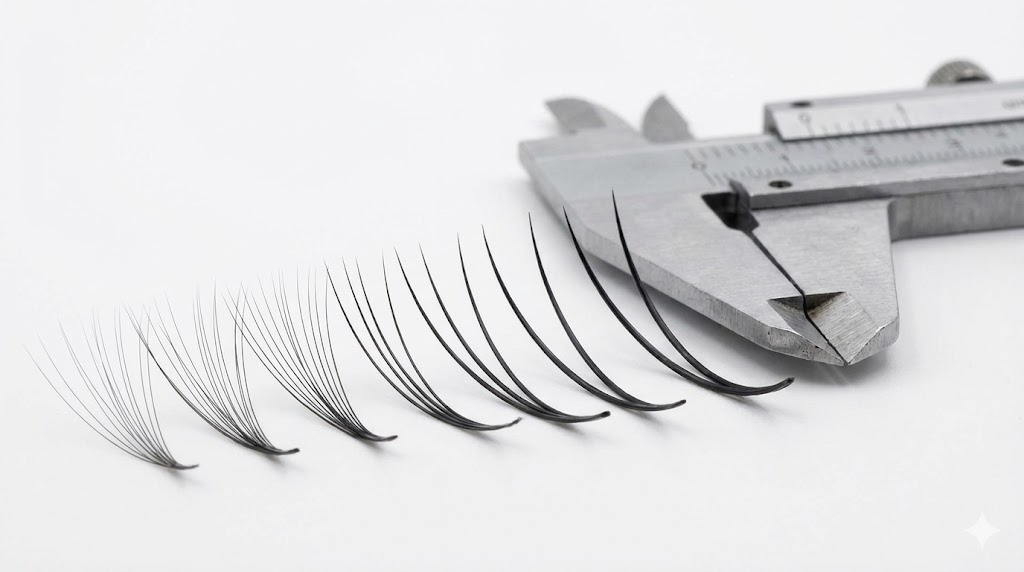
Lengths:8–14mm mixed (covers short-to-core mapping with minimal complexity)
Diameters:0.12 + 0.15 (within commonly used classic thickness ranges)
Add later (only if demand proves it)
B curl (more natural/low-lift look)
7mm + 15mm (special-case inner corners / long styling)
L curl for specialty styling (e.g., “foxy/liner effect”)
Trust note (worth stating on-page): higher-volume looks can increase load and may affect ocular comfort/health factors—so defaulting to widely workable diameters first is a safer, more universal starting point.
Line 4: Specialty (launch only after your core is stable)
What it’s for: differentiation once your bestsellers are already moving predictably.
Hold until you have reorder proof Specialty is where brands overbuild. Strategic assortment reduction is a known way to control cost/complexity without sacrificing sales—when you focus on bestsellers first.
Examples to add later
L / M curl “foxy” series (style-driven)
Brown / matte / glossy finishes (aesthetic-driven)
Narrow fan vs easy fan assortments (technique-driven)
What to skip at launch (to stay buyer-friendly)
Use this as a simple editorial rule-set on the page:
Skip extra curls until you can justify them with reorder data (SKU proliferation adds cost and operational strain).
Skip niche diameters (e.g., 0.03 mega-volume or very thick classics) until you can support education + safe usage expectations.
Skip multiple “micro-variants” (too many near-duplicates) because choice complexity can reduce buying speed and conversion.
SKU Strategy: How to Stay Lean Without Losing Sales
A “perfect” lash assortment isn’t the one with the most options—it’s the one that covers the most common demand with the fewest SKUs, because every new SKU adds real complexity (forecasting, picking/packing, customer choice, and cash tied up in inventory). Unmanaged product/SKU proliferation is widely associated with higher operational complexity and cost.
And inventory isn’t free—typical inventory holding/carrying costs are often cited in the ~20–30% of inventory value per year range, so “extra SKUs” can quietly tax your margins.
For lash trays, treat a SKU as one unique combination of:
Line (Classic/Hybrid/Volume) × curl × length format (mixed vs single) × diameter. This definition keeps your catalog measurable and makes the logic below easy to reuse and reference.
Phase 1: “Essentials” launch (lean, high conversion)
Goal: validate demand with the smallest assortment that still lets most buyers succeed. This mirrors the “minimum viable product” idea: start with the simplest version that enables real customer learning before scaling complexity.
Lower dead stock risk: fewer SKUs means fewer slow movers draining cash and storage.
Cleaner demand signals: you learn faster because sales concentrate into fewer items (clear winners emerge).
Phase 1 “exit criteria” (when you’re ready to expand)
You have reorder data (not just first orders).
You can identify your top “A items” (fast movers) and bottom “C items” (slow movers). ABC analysis is a standard inventory method for prioritizing control and replenishment around the most important items, commonly based on Pareto-style concentration of value/volume.
Phase 2: Expand based on what sells (demand-proven additions)
Goal: add SKUs only where you have proof they will move (reorders, not opinions).
Add next (typical winners)
Single-length refills for top lengths (often 11–12mm)
One specialty curl (often L)
One niche diameter (often 0.10 for softer classic or 0.03 for lighter volume)
Why these are the “right” additions
They directly follow the logic of SKU rationalization: expand where it improves service level and revenue without exploding complexity.
A simple decision rule (publishable + easy to follow)
Add a SKU only if it meets at least 2 of the following:
Appears frequently in repeat orders (not just first-time carts)
Causes stockouts or substitution when missing (buyers “settle” for another SKU)
Represents a meaningful share of sales (an “A item” under ABC-style prioritization)
Phase 3: Personalize by region or buyer type (without creating SKU chaos)
Goal: tailor the lineup to real market preferences while keeping the core assortment consistent.
How to do it safely
Keep a global core (your Phase 1 essentials)
Add a small regional module (1 curl or 1 length format) only where the data supports it
Why this is worth doing
Research in retail assortment planning consistently shows that local markets can differ meaningfully in what they buy, and that localized/distinct assortments can affect performance—so regional “modules” are often better than forcing one-size-fits-all.
Practical examples of “regional modules”
Glam-heavy market: allow D as the extra curl module
This is also where OEM / private label shines: we can help you lock a consistent fiber feel, curl stability, and tray design so your line feels intentional—not pieced together.
Quality and Consistency: What Buyers Should Ask Their Manufacturer (QC Checklist)
Specs only matter if they’re repeatable. For professional buyers, “almost the same” across batches turns into slower application, inconsistent results, and returns. That’s why you want a supplier who can show process control + traceability, not just a pretty sample.
Many lash products (and their adhesives) are treated as cosmetic products in major markets, so basic manufacturing discipline, cleanliness, and labeling matter—not just aesthetics.
Ask first: “What system do you use to keep batches consistent?”
Look for evidence of a real quality system, such as:
Cosmetics GMP practices (e.g., aligned to ISO 22716, which covers production, control, storage, and shipment)
A quality management system approach (ISO 9001 is a common baseline for consistent output and continual improvement)
A documented sampling/acceptance plan (many factories use AQL-style acceptance sampling; ISO 2859-1 is a widely used reference)
If you sell in the EU: manufacturing must comply with Good Manufacturing Practice (GMP), and your documentation often needs a clear statement of GMP compliance.
The 5 non-negotiable quality questions (with what to request)
1) Curl consistency (batch-to-batch)
Ask: “How do you verify that C curl behaves like C curl across batches?” Request proof: a written curl spec + in-process checks + retained reference samples per batch (even simple “golden sample” retention helps).
Why it matters: curl drift is one of the fastest ways to break trust—artists feel it immediately in placement, lift, and styling repeatability.
(GMP-style controls are designed specifically to reduce variability and document deviations.)
2) Length accuracy + tolerance
Ask: “What tolerance do you hold on length, and how do you measure it?” Request proof: the stated tolerance in writing + a simple QC log or inspection record.
Tip: don’t invent a tolerance yourself—ask them to state theirs and show they can hold it consistently (this is exactly what structured sampling/acceptance systems are for).
Ask: “Can you provide a materials/finish spec and confirm it won’t change without approval?” Request proof: a one-page spec sheet that names:
fiber type/finish
gloss level or “matte vs glossy” definition (even if qualitative)
change-control promise (“no substitution without written notice”)
This protects your brand promise (“soft luxury” vs “bold/glossy”) from silent material swaps.
4) Tray layout (speed + waste)
Ask: “How is the tray designed to reduce pickup time and strip waste?” Request proof: a sample tray + photos + (ideally) quick usability testing feedback from 1–2 working artists.
Look for consistent strip spacing, clean base adhesion (no gummy residue), clear labeling, and predictable pickup behavior. This is where “good samples” often fail at scale—so ask for a production-batch sample, not a showroom sample.
5) Packaging protection + transit durability
Ask: “How do you ensure trays arrive clean, intact, and retail-ready after shipping?” Request proof: at least one of:
They can’t provide written tolerances (everything is “about right”).
No batch/lot traceability (“we don’t track that”).
Samples are great, but they won’t send a production-batch sample for verification.
Packaging arrives crushed repeatedly and they have no transit testing story.
Bottom line: the best supplier isn’t the one with 300 SKUs—it’s the one who can prove your “C/CC, 8–14, 0.05/0.07” stays the same every reorder. That’s how you earn professional trust and protect your brand.
Common Mistakes Buyers Make (and How to Fix Them)
Rule of thumb: Your first catalog should be easy to choose from and easy to reorder. More options feel competitive, but they often add decision friction and inventory complexity—especially before you have reorder data.
Mistake 1: Launching too many curls (SKU explosion + slower buying)
Why it hurts
Every extra curl multiplies your lengths × diameters, inflating SKUs and operational complexity (ordering, labeling, forecasting, quality consistency). Product complexity is repeatedly linked to worse operational performance (cost/time) across many industries.
Too many “similar” choices can reduce conversions because buyers hesitate (“Which one should I pick?”).
Fix
Start with 2 core curls (usually C + CC, or C + D in glam-heavy markets).
Add a 3rd curl only after proven demand (repeat reorders, not just one-time curiosity).
Proof of demand (simple, measurable)
A curl earns a permanent SKU when it shows repeat orders across multiple buyers and predictable refill behavior (e.g., consistent monthly pulls).
Mistake 2: Carrying extreme lengths too early (dead stock + messy decisions)
Why it hurts
Extra-long or extra-short lengths often have narrower use cases; stocking them early increases inventory holding risk without increasing sales proportionally.
Research in retail assortment shows you can often reduce assortment without losing sales, and that perceptions/choice don’t scale linearly with “more SKUs.”
Fix
Keep your core range to 8–14mm mixed at launch.
Add 7mm and 15–16mm only when your market consistently asks (and reorder data supports it).
Fast expansion play (low risk)
Instead of adding every length, add single-length refills only for your top movers (often 11–12mm in many salons) once you see patterns.
Mistake 3: Confusing “thicker” with “better” (comfort + wearability risk)
Why it hurts
Thicker diameters can look bolder, but they also increase weight/stress on the natural lash if used indiscriminately; medical and clinical references discuss lash extension complications including lash damage/traction alopecia in some cases, emphasizing safe application and avoiding behaviors/conditions that stress lashes.
Fix
Position diameter as a comfort + wearability choice, not a “quality” marker:
Classic starters: 0.12 + 0.15
Volume starters: 0.05 + 0.07
Add “bolder” or “ultra-light” diameters later only if your audience specifically requests them.
Make it buyer-proof (one sentence buyers remember)
“Choose the lightest diameter that still achieves the look—comfort and retention win reorders.”
Mistake 4: Not matching the line to buyer type (wrong catalog for the job)
Why it hurts
Different buyers optimize for different outcomes:
Salons want fast decisions + reliable reorders
Wholesalers want breadth but still need fast movers
Brand owners need a consistent “signature look” and repeatable quality
B2B research shows segmentation is widely used to improve outcomes, but many firms struggle when they don’t align offerings and programs to how customers actually buy.
Fix
Build one clear default lineup per buyer type:
Salon owner: minimal SKUs, universal specs, reorder-first
Wholesaler: core + a few strategic add-ons (not everything)
Brand owner: tight range + consistent aesthetic + QC story
A quick self-check
If a buyer can’t answer “what should I order first?” in 30 seconds, the catalog is too complex.
Quick Checklist: Buyer Decisions in 10 Minutes
Who is this line for? (salon pros / wholesalers / consumers)
What is the signature look? (natural / lifted / glam / foxy)
Core curls (pick 2): C + CC (or CC + D)
Core lengths: 8–14mm mixed
Classic diameters: 0.12 + 0.15
Volume diameters: 0.05 + 0.07
Plan expansion: top single-length refills + 1 specialty curl later
Decide packaging: pro-only vs retail-ready (private label options)
Set ordering plan: start lean, reorder based on sell-through (this is where low MOQ helps)
FAQ
1) If we can only choose one curl to start, what should it be?
If we absolutely had to pick one, we’d usually choose C because it’s the most versatile across classic and hybrid looks. In some glam-heavy markets, CC can be the better single-curl starter.
2) What length range sells fastest for most salons?
In many salons, the fastest-moving working lengths cluster around 10–13mm. A mixed 8–14mm tray supports those while still covering inner corners and longer styling.
3) What diameter is “safest” for a broad audience?
There isn’t one perfect answer, but from a buying standpoint, 0.12 for classic and 0.05–0.07 for volume tend to be widely workable for trained professionals and popular with clients.
4) Should we offer L curl right away?
Only if “foxy/liner effect” is a major part of your brand promise or your market strongly demands it. Otherwise, L curl is a great Phase 2 addition.
5) Mixed trays or single-length trays—which should we launch?
Most new product lines do best starting with mixed trays for simplicity and faster purchasing decisions. Add single-length refills after you have reorder data.
Key Points
Curl defines your style identity—start with two core curls to avoid SKU overload.
Length determines mapping flexibility—8–14mm is a clean, high-demand starter range.
Diameter drives comfort and texture—stock 0.12/0.15 (classic) and 0.05/0.07 (volume) first.
Build your catalog in phases: Essentials → proven refills → specialty expansions.
Mixed trays simplify launches; single-length trays shine once you know bestsellers.
Consistency matters as much as specs—batch-to-batch stability protects your brand reputation.
OEM / private label works best when your line has a clear “signature look” and a lean SKU plan.
Using a manufacturer that offers low MOQ, stable quality, and factory-direct pricing helps you test and scale smarter.
If you want, we can also turn this cheat sheet into a starter SKU list (Classic/Hybrid/Volume) with a recommended first order quantity plan—optimized for your customer type (salon, wholesale, or brand launch) and your preferred “signature look.”
At LashVee, we help lash brands and professional buyers avoid common sourcing mistakes—from inconsistent curl and fiber quality to unstable band bonding in mass production. Our work focuses on translating design intent into repeatable, production-ready lash styles.
If you’re evaluating suppliers, refining a lash design, or planning a private label order, we’re happy to share practical input or provide samples to support your decision.
At LashVee, we help lash brands and professional buyers avoid common sourcing mistakes—from inconsistent curl and fiber quality to unstable band bonding in mass production. Our work focuses on translating design intent into repeatable, production-ready lash styles.
If you’re evaluating suppliers, refining a lash design, or planning a private label order, we’re happy to share practical input or provide samples to support your decision.