If you’ve ever felt confused by lash extension numbers like 0.05 / 0.07 / 0.15 and curl letters like J / B / C / D / L, you’re not alone. Lash extensions are “custom” because every set is built from measurable parameters: curl, diameter (thickness), length, and mapping. Choosing the right combination is what makes lashes look flattering, feel comfortable, and stay safe for the natural lash.In this guide to eyelash extension sizes, we’ll break down curl, thickness (diameter), and length so you can choose the right lash set confidently.
– The most common lash extension curl types (J, B, C, D, L) and how to choose them
– How diameter/thickness (mm) affects weight, softness, and style compatibility
– How to select lash extension lengths (mm) for natural vs dramatic results
– Practical charts that explain how professionals combine curl + thickness + length** safely
Eyelash Extension Sizes Basics: What the numbers and letters mean
When people search “lash extension size,” they’re usually trying to decode two things:
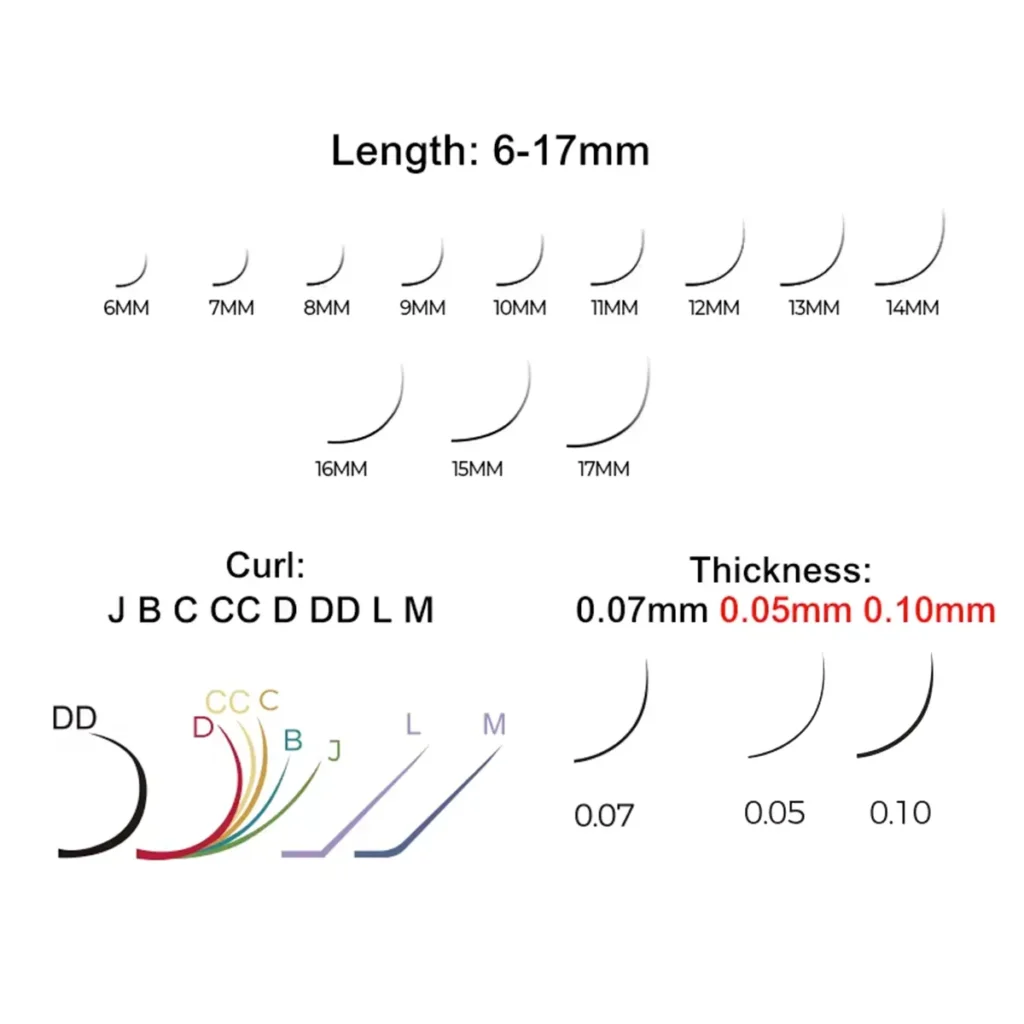
Curl (letters): how lifted the extension is (J is straighter, D is more dramatic).
Diameter / thickness (mm): how thick each single fibre is, measured in millimeters (e.g., 0.05 mm, 0.10 mm, 0.15 mm). Thickness is often called “diameter” in the lash industry.
Length (mm): the extension’s length, also measured in millimeters. Most professional lash lengths commonly range from natural short lengths to dramatic longer lengths depending on the brand system.
These three variables combine to create the final look and affect how heavy the set feels. That’s why lash professionals rarely choose “the longest and thickest option”—it may look bold, but it’s not always wearable or safe.
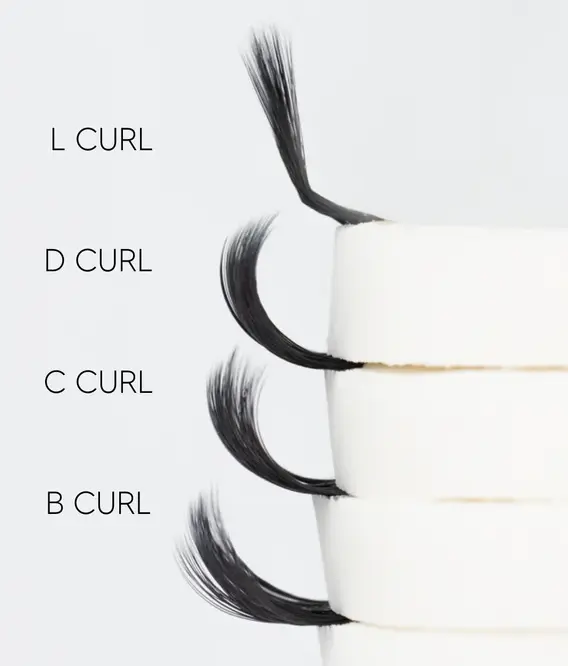
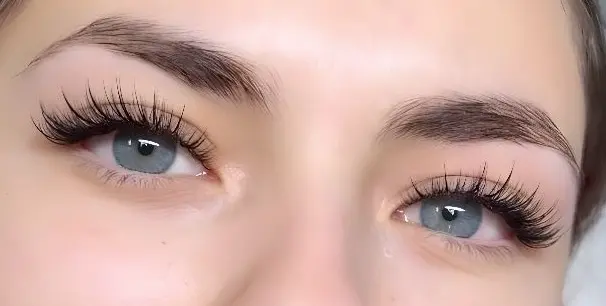
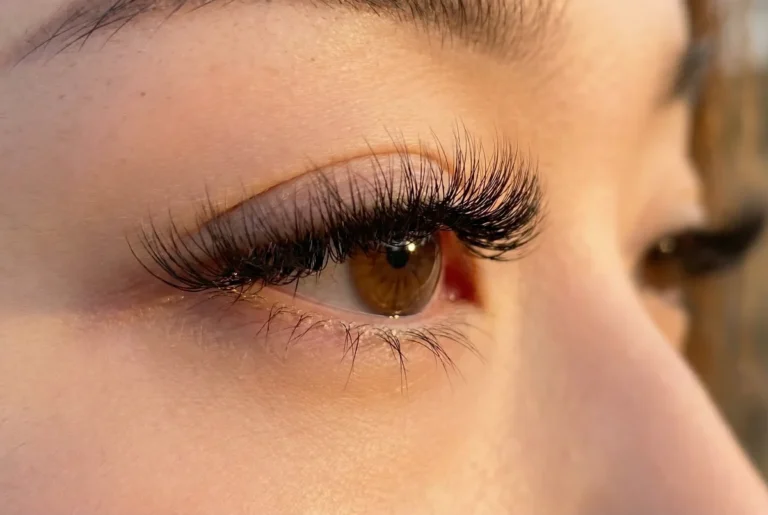
Curl is one of the fastest ways to change the vibe of a lash set—without changing thickness or length. Most brands use letter-based curl systems, with J as the most natural/straight and D / L creating stronger lift.
What each curl is best for (simple explanation)
J Curl (very natural / straight)
Minimal lift, close to the natural lash line
Often used to blend with naturally curly lashes or for ultra-natural sets
B Curl (soft lift)
Slight curl, subtle “mascara effect”
Great for clients who want natural enhancement without obvious lift
C Curl (most popular everyday curl)
Noticeable lift but still natural-looking
Often chosen for “brightening” the eye and creating a clean open look
D Curl (dramatic lift)
Strong curl for bold volume or glam styles
Creates an instant “eye-opening” look, but can feel too intense on some eye shapes
L Curl (strong lift with a flatter base)
Shaped more like an “L” profile: a straighter base then a sharp lift
Popular for hooded or deep-set eyes because it can give lift without pushing into the lid
Pro note: curl choice isn’t only about drama. It’s also about eye shape and lid space. A dramatic curl on a very hooded lid may look amazing—or it may press into the lid and feel uncomfortable.
Diameter vs Thickness: What those mm sizes actually mean
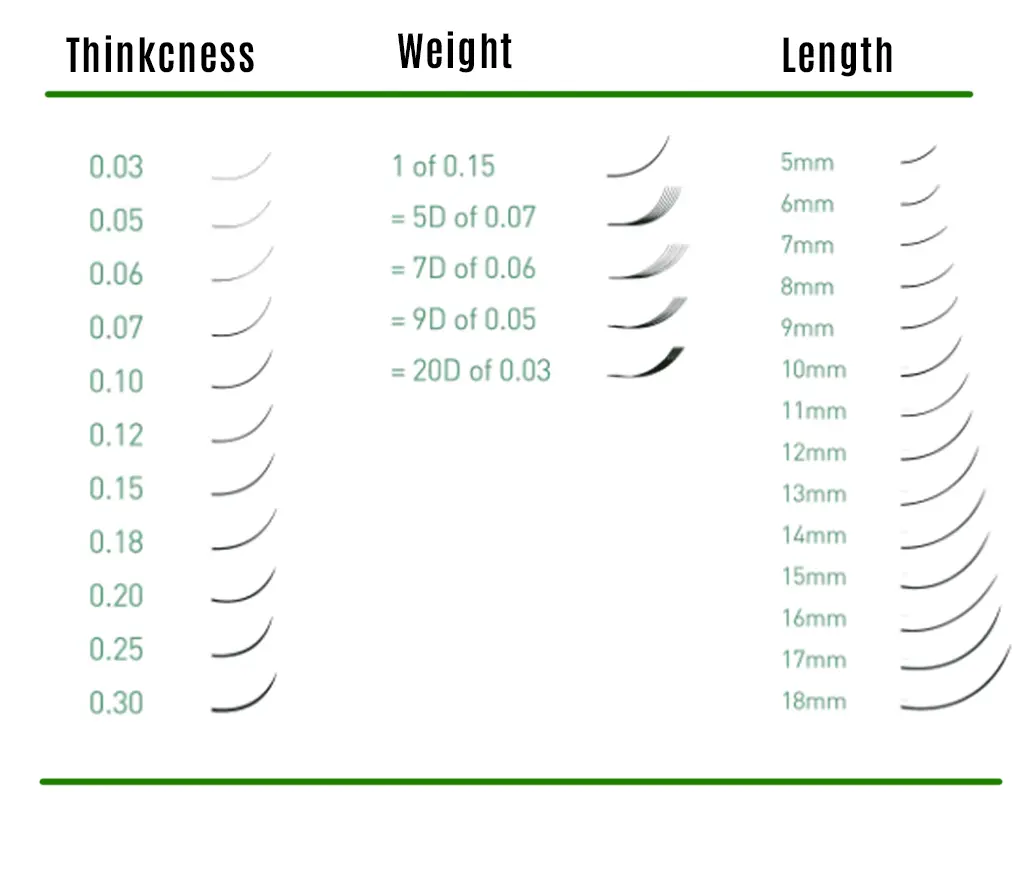
Diameter (thickness) is measured in millimeters and typically ranges from very fine to thicker fibres depending on the lash system. Many professional guides describe diameter ranges roughly around 0.03 mm up to 0.20 mm+.
Why thickness matters
Thickness affects:
How bold the lash line looks
How soft the fans appear
How heavy the lash feels on the natural lash
How many lashes you can safely place (classic vs volume)
Common diameter ranges (how they’re typically used)
Most suppliers carry popular diameters like 0.03, 0.05, 0.07, 0.10, 0.15 mm.
Thin (0.03–0.07 mm)
Typically used for volume and mega volume (because multiple fibres can be fanned while staying lightweight)
Medium (0.10–0.15 mm)
Common for classic sets or very light volume depending on the client’s natural lash strength
Thicker (0.18–0.20 mm+)
Creates a bolder lash line, but requires stronger natural lashes and careful application
Not always the best choice for everyday wear, especially for fine natural lashes
Lash Lengths (mm) and how to choose the right range
Lash extension lengths are also measured in millimeters and selected strategically (not randomly). Even a 1–2mm difference can change the final look dramatically.
Typical length ranges you’ll see
Many professional systems include lengths from subtle to dramatic, commonly starting around the shorter range and extending into longer statement lengths.
Length isn’t just about “longer is better”
Longer lashes can:
Look amazing in photos
But feel heavier, twist more easily, and stress retention if not balanced with curl + thickness
A smart length choice makes the set:
flattering from the front
symmetrical from both sides
comfortable all day
How Curl + Diameter + Length work together (the “weight logic”)
This is where most beginners get stuck: they pick strong curl + thick diameter + long length all at once.
But in real lash design, these parameters trade off.
The simple rule:
If you increase one “intensity factor,” reduce another:
Stronger curl (D/L) → consider shorter length or thinner diameter
stay near the client’s natural lash + small increments
Soft glam
add a longer peak (center or outer third)
Dramatic
increase length gradually + keep diameter lighter
Cat eye
longer at outer corner, but avoid going too long if eyes are downturned
Tip: even small length changes matter in millimeter systems, and can dramatically change the look.
Common mistakes that ruin retention and comfort
These are the reasons people search “why do my lash extensions fall out fast” or “why do lashes feel heavy.”
Mistake 1: Going too thick and too long
Thick + long = heavy. Heavy = faster shedding and discomfort (especially on fine lashes).
Mistake 2: Choosing the most dramatic curl for every eye
D curl looks stunning—but some eye shapes and lid spaces don’t suit it. Curl selection should be personalized.
Mistake 3: Ignoring mapping balance
Even “perfect lashes” look wrong if the length distribution is off. Pre-planning zones (inner / mid / outer) is what creates symmetry.
Mistake 4: Using one diameter for every style
Volume looks best with thin fibres because you’re multiplying lash count without adding harsh weight.
FAQ: Most searched lash size questions
What is the most popular lash extension curl?
C curl is widely considered the most popular because it’s noticeable, flattering, and still natural enough for daily wear.
What diameter is best for beginners?
For classic beginners, many start with mid-range classic diameters (commonly around 0.10–0.15 depending on natural lash strength). For volume beginners, thinner fibres like 0.05–0.07 are common because they stay lightweight.
What lengths are best for a natural look?
Natural looks usually rely on shorter-to-mid lengths with soft mapping. Longer lengths create more drama but can reduce daily comfort and stability.
Are thinner lashes always better?
Not always. Thin lashes are great for volume because they allow multiple fibres without heavy weight. But a classic set still needs enough diameter to look defined—so it’s about matching the goal + natural lash strength.
How do I choose curl for hooded eyes?
Many artists use stronger lift curls or L-style curl shapes to create lift without losing the eye-opening effect, especially on hooded or deep-set lids.
Final checklist: choosing lashes the smart way
Before you buy or build a lash set, ask these 5 questions:
What look do I want? (natural / fluffy / dramatic / wispy)
What curl fits my eye shape? (C for everyday, D/L for stronger lift)
What thickness is safe and comfortable? (choose diameter with weight in mind)
What length range looks balanced—not droopy? (mm choices matter)
Is the final set wearable for my lifestyle? (work, sports, makeup habits)
If you understand curl, diameter, and length as a system—not separate choices—you’ll get lash results that look better, last longer, and feel lighter.
If you’re creating a lash brand or sourcing products for your salon, the fastest way to avoid costly mistakes is to start with **spec clarity**. Lashvee supports **white label and private label lash extensions**, including best-seller SKU planning, sample kits, packaging options, and consistent batch quality for long-term reorders.
Want a fast recommendation?
Send us your target market, preferred styles (classic / volume / premade), and your price positioning. We’ll reply with a practical SKU mix, diameter and curl suggestions, plus MOQ and lead time guidance—so you can launch with confidence.
At LashVee, we help lash brands and professional buyers avoid common sourcing mistakes—from inconsistent curl and fiber quality to unstable band bonding in mass production. Our work focuses on translating design intent into repeatable, production-ready lash styles.
If you’re evaluating suppliers, refining a lash design, or planning a private label order, we’re happy to share practical input or provide samples to support your decision.
At LashVee, we help lash brands and professional buyers avoid common sourcing mistakes—from inconsistent curl and fiber quality to unstable band bonding in mass production. Our work focuses on translating design intent into repeatable, production-ready lash styles.
If you’re evaluating suppliers, refining a lash design, or planning a private label order, we’re happy to share practical input or provide samples to support your decision.