
If you are new to lash extensions, YY and classic can look “similar” in the tray but behave differently on the eye. That mismatch wastes time, creates uneven density, and increases rework. This guide makes the choice predictable.
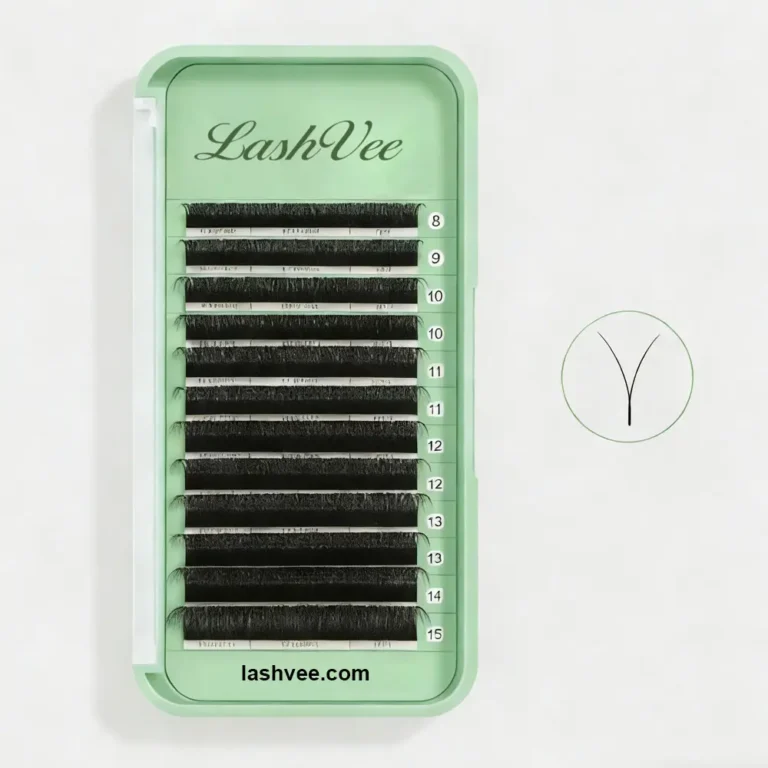
YY lashes are Y-shaped extensions that split into two legs (often described as a light “2D effect”), so one placement creates more texture and coverage than a single classic lash. Classic lashes are single fibers applied 1:1 to each natural lash for the cleanest, most controllable definition.
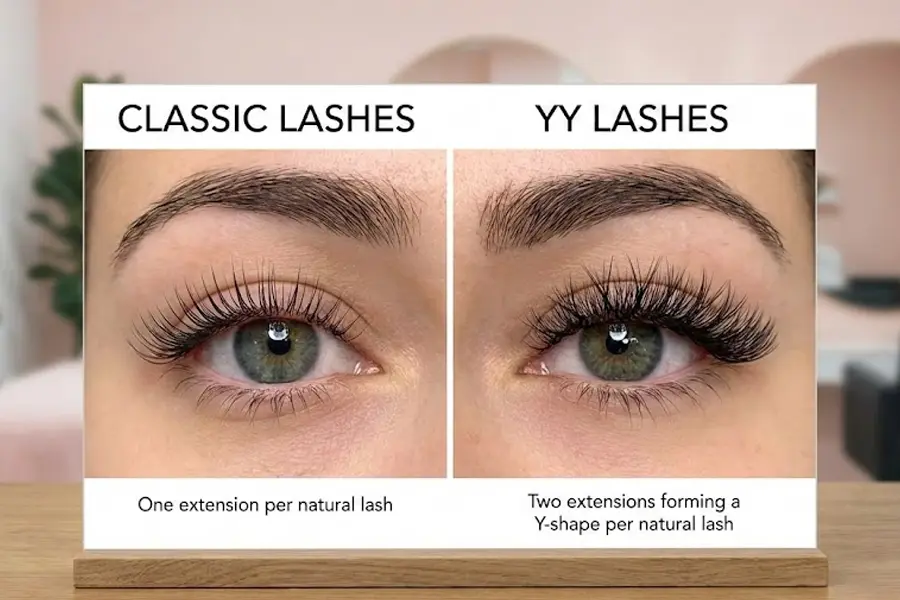
This article will explain what YY and classic lashes are at a structural level, how that structure affects beginner application speed and results, and how to specify and QC these products so batches stay consistent when you scale.
What is the structural difference between YY lashes and classic lashes?
Beginners often assume YY is “just thicker classic,” then choose the wrong diameter and end up with heavy bases or messy texture. The solution is to compare geometry, not labels.
YY lashes use a split (Y-style) structure that creates multiple tips from one base, so each extension visually fills more space. Classic lashes are single straight fibers designed for true 1:1 placement, giving the most uniform lash line and the easiest styling control.
How the product is actually built in production
Most professional lash fibers are made from synthetic thermoplastic polyester, commonly described in the industry as PBT-based fiber. PBT is valued because it can be heat-formed and hold curl with good dimensional stability.
From a factory viewpoint, “classic vs YY” is a forming-and-assembly question:
- Classic: I control fiber diameter, taper quality, curl-setting parameters, and strip alignment. The output is one uniform filament per lash piece, optimized for predictable pickup and a clean bonding footprint.
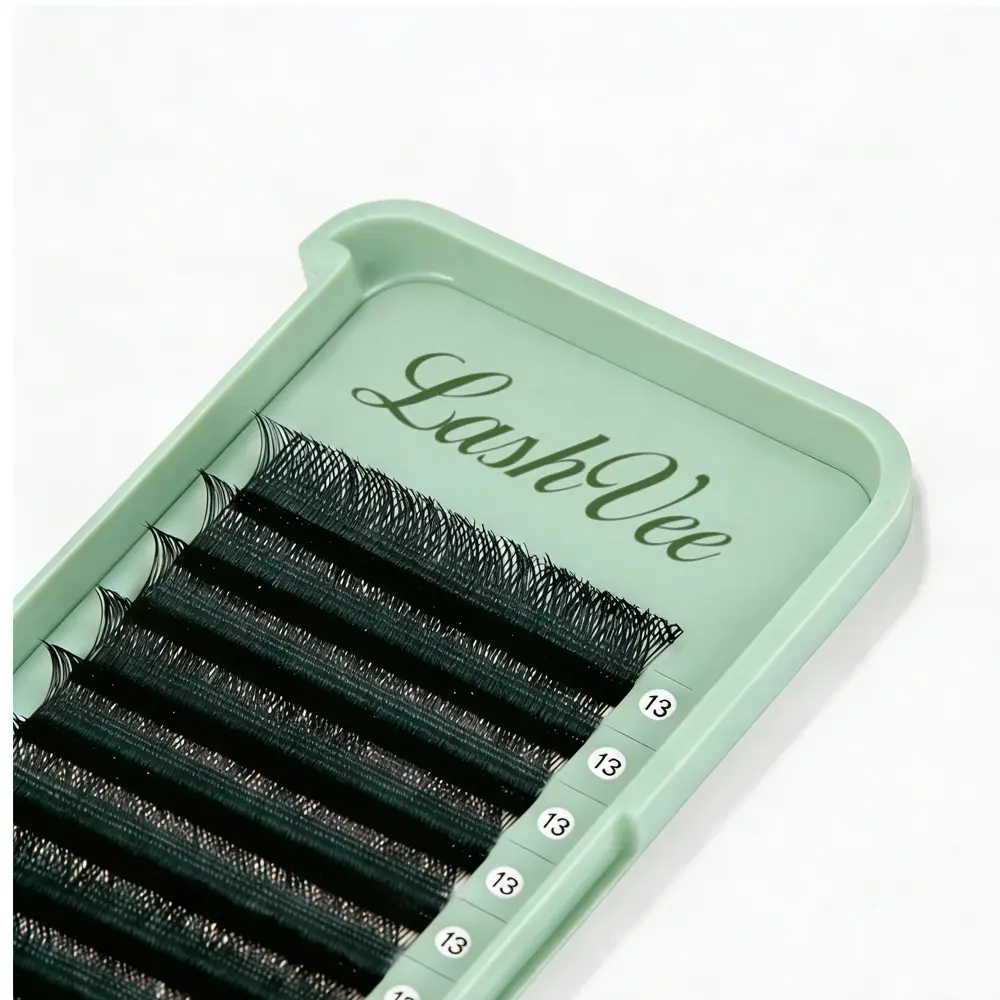
- YY: I still start with thin fibers, but the product must create a stable stem while splitting into two legs (often resulting in multiple visible tips). The split point, symmetry, and any bonding/formation method must stay within tight tolerance. If that tolerance drifts, YY lashes open inconsistently and the set looks patchy.
YY is therefore more sensitive to small process variation than classic. A “good sample” can be easy to produce once, but consistent YY across lots requires stronger control on split geometry and strip behavior.
What changes performance, comfort, durability, and cost
In practice, these variables drive the user experience:
- Stem geometry (YY): Longer stems often pick up faster and sit flatter, but a wide or stiff stem can create a heavier lash line than the brand intends.
- Split symmetry (YY): If one leg opens wider than the other, you get inconsistent texture and visible gaps.
- Tip taper (both): Poor taper or damaged tips can feel scratchy and reduce perceived quality.
- Curl setting and rebound (both): Curl stability matters for mapping and direction control. Any curl drift is amplified in YY because the split makes direction errors more visible.
- Strip adhesive and release (both): Too much strip tack can deform bases during pickup; too little causes irregular pickup and slows application.
A practical comparison table for beginners
| Attribute | YY Lashes | Classic Lashes |
|---|---|---|
| Visual result | More texture and coverage per placement | Clean, defined 1:1 enhancement |
| Behavior variability | Higher (depends on split symmetry and opening) | Lower (single fiber is predictable) |
| Best use case | “Soft volume” look without handmade fans | Natural to defined sets with precise mapping |
| QC focus | Split symmetry, stem thickness, opening consistency | Diameter tolerance, taper quality, curl stability |
What buyers commonly misunderstand
The most frequent misunderstanding is treating “diameter” as the full story. A YY piece may be built from multiple fine strands, so the printed number does not automatically translate to the same on-lash load as a single classic fiber. For beginners, the safer mindset is: compare total structure and load per natural lash, then choose mapping accordingly.
Supplier evaluation perspective
When I evaluate YY production capability, I do not start with marketing photos. I ask for evidence of:
- split symmetry defect tracking
- curl-setting consistency (lot records)
- strip release consistency (pickup trials across multiple trays)
- traceability for fiber lots and heat-setting batches
These controls matter more for YY than classic because YY’s structure introduces more “failure modes” (uneven opening, thick stems, tip sticking, inconsistent texture).
Which is easier for beginners: YY lashes or classic lashes?
Beginners hear “YY is faster,” then struggle when sets look uneven or when clients want a clean lash line. The solution is to choose based on the kind of control you need, not only speed.
YY lashes can reduce placements needed to create a fuller look because each piece covers more area. Classic lashes are usually easier to keep uniform because 1:1 fibers behave consistently and give the most controllable lash line, especially for mapping and direction.
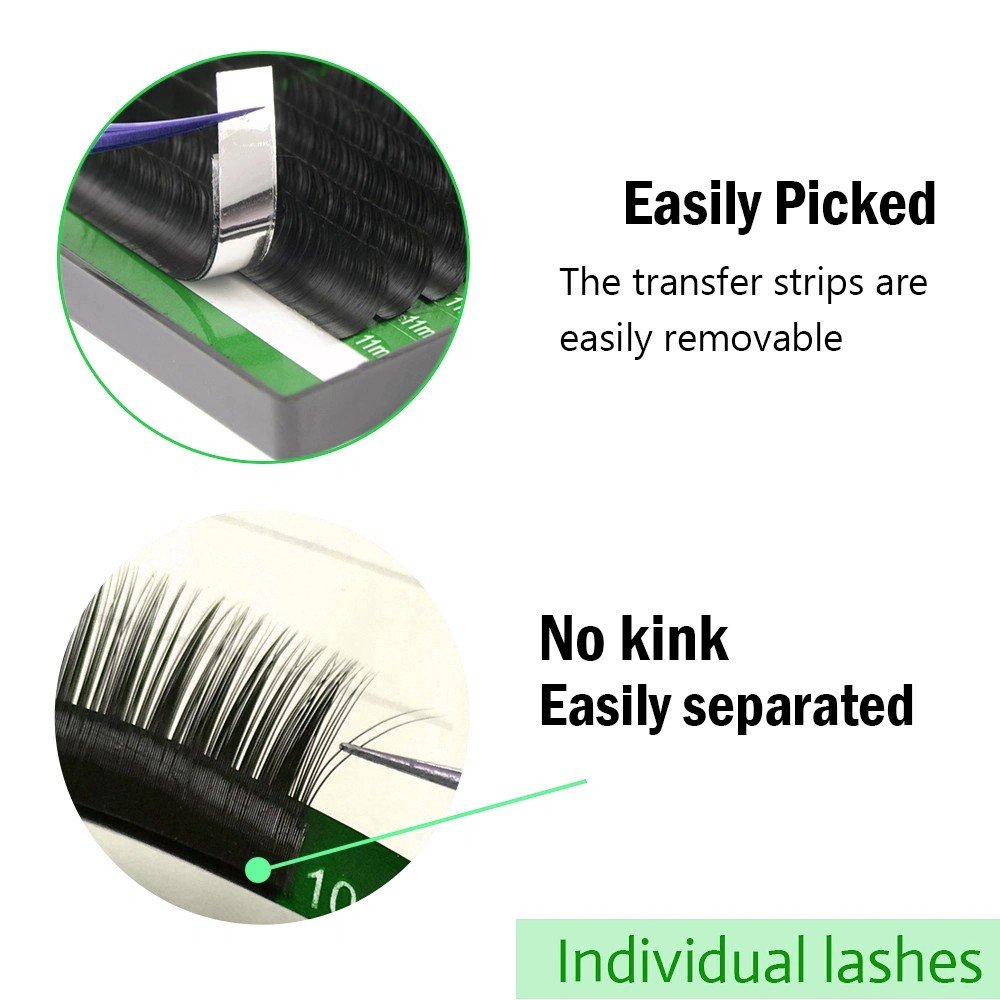
Application speed in real workflows
YY can be faster when the product is consistent because the “coverage per placement” is higher. Many industry guides describe YY as a way to mimic a light volume effect while applying similarly to classic.
However, speed disappears if the tray is inconsistent:
- stems stick to the strip and twist on pickup
- tips cling together and do not open cleanly
- curl varies across rows, forcing you to correct direction during placement
Classic can be faster than expected for beginners who focus on isolation and direction, because classic has fewer structural variables. In factory terms, classic gives you a narrower performance envelope to manage during application.
Styling control and predictability
Classic is the baseline for clean mapping. One fiber per natural lash produces a consistent line, so you can design:
- clean cat-eye or doll-eye transitions
- predictable density distribution
- uniform direction with minimal “spikes” unless intentionally styled
YY creates texture automatically. This is useful when a beginner wants a fuller look without learning handmade volume fans. The tradeoff is that YY can create unintended texture if the split does not open evenly or if the base looks darker than planned.
Retention: what matters more than lash type
Retention depends on bonding mechanics and process discipline. From a safety and consumer guidance perspective, FDA notes that false eyelashes/extensions and their adhesives fall under cosmetic safety and labeling expectations, and ingredient awareness matters because the eyelid area is delicate.
The American Academy of Ophthalmology also highlights that irritation and injury risks exist and that users should take care with application and aftercare.
From a eyelash manufacturer’s viewpoint, the product-side contributors to retention are:
- bonding footprint (how flat and clean the base sits on the natural lash)
- load (overloading increases premature shedding and discomfort risk)
- curl match (mismatch creates leverage that can peel the bond)
- base cleanliness (residue, dust, or oily contamination reduces adhesive performance)
YY can support good retention when the stem is straight, consistent, and clean. Classic can support excellent retention because the base is simple and predictable. In both cases, the deciding factor is whether the lash product and the technician’s process create stable contact without excess weight.
How I suggest beginners decide
- Choose classic if you need the cleanest lash line, you want to master mapping fundamentals, or your client preference is “natural but defined.”
- Choose YY if you want a fuller, textured look with fewer placements, and you are using a tray with consistent opening behavior and controlled stems.
A beginner-friendly product is not just “easy to apply.” It is “hard to apply wrong.” That usually means tighter tolerance and stable strip behavior—especially for YY.
How should OEM/ODM buyers specify YY lashes vs classic for consistent supply?
Many new buyers choose YY or classic based on one sample tray and a few photos. That approach breaks when you reorder, expand SKUs, or sell into professional channels that notice inconsistency. The solution is to specify measurable tolerances and require process transparency.
For OEM/ODM, YY specs should emphasize stem geometry and split symmetry because those drive opening consistency and perceived quality. Classic specs should emphasize diameter tolerance, taper, and curl stability because those drive uniformity and a clean lash line across lots. Both should follow cosmetic GMP controls for mix-up prevention and batch traceability.

What matters in Eyelash OEM production (beyond the tray photo)
In manufacturing, “YY” and “classic” are categories, not guarantees. Two suppliers can label the same product name but control it differently. That is why I recommend building your spec around measurable items:
For YY lashes
- split point tolerance (how consistent the split location is)
- stem thickness range and stiffness target
- opening consistency (qualitative criteria plus defect thresholds)
- tip taper acceptance criteria (under magnification)
- strip pickup behavior (does the stem twist, collapse, or deform)
For classic lashes
- diameter tolerance (target plus allowable deviation)
- taper consistency (tip sharpness and smoothness)
- curl stability (drift checks after storage and transport simulation)
- strip alignment and row labeling accuracy
How process control reduces long-term risk
Cosmetics GMP frameworks exist because consistency is a systems problem, not a “craft” problem. ISO 22716 provides guidelines for production, control, storage, and shipment of cosmetic products.
FDA also provides guidance discussing cosmetic GMP and references ISO 22716 in that context.
Even if lash extensions are not regulated identically across markets, GMP-style controls are still practical sourcing tools. They reduce:
- lot-to-lot drift (curl, texture, pickup feel)
- labeling mix-ups (curl/length/diameter errors)
- contamination and residue issues
- inconsistent strip adhesive behavior
Common sourcing mistakes I see when brands scale
- Over-expanding SKUs too early: Too many curls/lengths increases changeovers and defect rates, especially for YY.
- No defect definition: Without clear acceptance limits for split symmetry or stem thickness, you cannot enforce consistency.
- No lot traceability: If customers complain, you cannot isolate the root cause to one fiber lot or heat-setting batch.
- QC only at “final look” level: The set can look acceptable on one eye but still have hidden variability that creates returns later.
A supplier evaluation checklist I use (practical and repeatable)
| Control Area | What to ask for | Why it matters |
|---|---|---|
| Incoming fiber checks | fiber lot ID + basic property checks | reduces “soft batch / stiff batch” surprises |
| Curl-setting records | temperature/dwell/cooling controls + lot logs | prevents curl drift and mixed-direction trays |
| YY geometry QC | split symmetry defect rate + sampling method | prevents uneven texture and patchy sets |
| Strip consistency | pickup/release test across multiple trays | protects beginner usability and appointment time |
| Packaging accuracy | row labels verified against production list | reduces returns caused by wrong curl/length |
Why a manufacturer-led approach is more stable than trend-led sourcing
When a supplier treats YY as a trend product, they optimize for a good photo. When a supplier treats YY as a controlled structure, they optimize for repeatability: stable split geometry, stable stems, stable curl, and stable strip behavior.
As LashVee, I focus on production controls that support repeat orders. I prioritise process transparency, measurable tolerances, and QC records that connect your approved sample to the batch you receive months later. That is what keeps your SKU reliable when you move from “testing” to “selling at scale.”
Conclusion
YY lashes and classic lashes solve different beginner problems. YY uses a split structure to create more texture and coverage per placement, but it needs tighter control of stem geometry and opening consistency. Classic uses single fibers for 1:1 application, giving the cleanest lash line and the most predictable mapping. For OEM/ODM buyers, the right choice comes from measurable specs, GMP-style controls, and supplier transparency—not from one tray photo.
References
- American Academy of Ophthalmology. (2018, February 23). Eyelash extension facts and safety. citation:13‡AAO
- International Organization for Standardization. (2007). ISO 22716:2007 Cosmetics — Good Manufacturing Practices (GMP) — Guidelines on Good Manufacturing Practices. citation:14‡ISO
- U.S. Food and Drug Administration. (2013). Draft guidance for industry: Cosmetic good manufacturing practices (PDF). citation:15‡U.S. Food and Drug Administration
- U.S. Food and Drug Administration. (2022, June 28). Eye cosmetic safety. citation:16‡U.S. Food and Drug Administration
- U.S. Food and Drug Administration. (2022, February 25). Cosmetics safety Q&A: Eye cosmetic safety. citation:17‡U.S. Food and Drug Administration
- SpecialChem. (2025, July 9). Polybutylene terephthalate (PBT) material guide & properties. citation:18‡SpecialChem
- Celanese. (n.d.). Polybutylene terephthalate (PBT): Product and material overview. citation:19‡Celanese
- Kwin Lashes. (2024, August 5). A comprehensive guide to YY lashes extensions. citation:20‡Kwin Lashes
- Dulce Lash. (n.d.). What to know about classic eyelash extensions (1:1 method). citation:21‡Dulce Lash and Skin
- PLA Pro. (n.d.). Classic lash extensions overview (1:1). citation:22‡Paris Lash Academy