
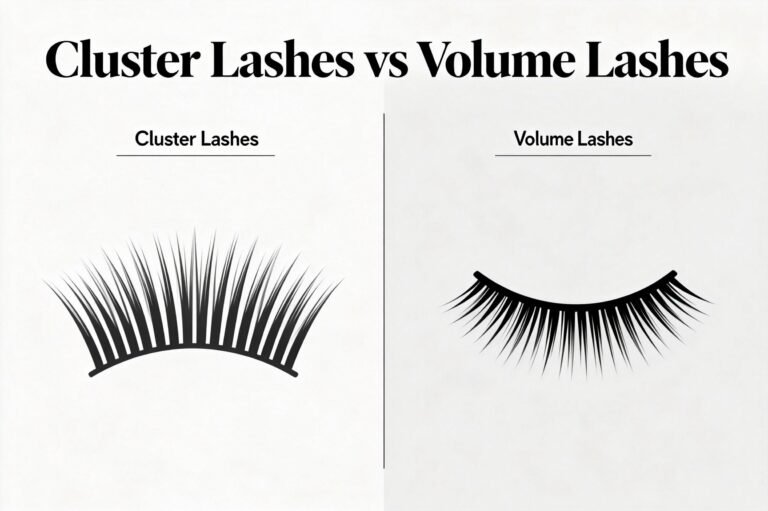
Cluster Lashes vs Volume Lashes: the quick answer
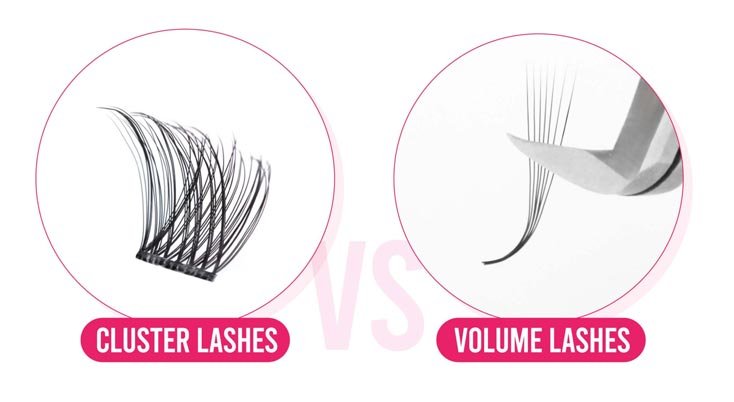
Cluster lashes are pre-made segments (a small group of fibers bonded at the base) applied with DIY-style adhesives. They’re fast and flexible, but can sometimes bridge multiple natural lashes, so they’re best treated as short-wear with gentle removal.
Volume lash extensions are a professional technique: a lash artist isolates one natural lash and attaches a lightweight fan. When done correctly, volume is built for balanced weight + longer retention.
At a glance: what’s actually different?
| Factor | Cluster lashes (DIY segments) | Volume lash extensions (professional) |
|---|---|---|
| Application | Placed in segments (often DIY) | One fan per one isolated natural lash |
| Best for | Events, weekends, flexible styling | Daily wear, consistent fullness |
| Wear time expectation | Short-wear (varies by adhesive + habits) | Longer-wear with fills (varies by growth + aftercare) |
| Main “risk factor” | Bridging + rough removal | Poor isolation (“stickies”) + heavy fans |
| Maintenance | More frequent removal/refresh | Regular fills every few weeks |
Which should you choose? (60-second decision)
- Choose clusters if you want speed, like changing styles often, and you can commit to gentle removal (no peeling).
- Choose volume if you want wake-up-and-go lashes for weeks, prefer professional oversight, and plan for fills.
- Choose neither for now if you have pain, swelling, discharge, or vision changes—pause and consult an eye-care professional.
Why we wrote this guide
As the Lashvee team, we hear the same question from DIY cluster-lash users, salon clients, and lash pros: “What’s the real difference between cluster lashes and volume lashes—and which is safer for my natural lashes?” This guide is our science-based, experience-backed answer, focused on what you can do to get better retention with less irritation risk.
Here’s the simplest way to think about it: cluster lashes are pre-bonded segments you place along (often under) the lash line, while volume lashes are professional fans attached to one isolated natural lash. They can look similar in photos, but they behave very differently during sleep, cleansing, shedding, and removal.
We’ll compare them across wear time, lash health risk factors (like “bridging”), comfort for sensitive eyes, adhesives, cost/maintenance, and aftercare—then give you a quick decision guide. (We’ll also be honest: direct head-to-head clinical studies on clusters vs volume are limited, so we rely on known lash biology and ocular-surface principles, plus what we see daily across product use and salon feedback.)
What’s the difference between cluster lashes and volume lashes?
Cluster lashes (DIY clusters / segmented clusters)
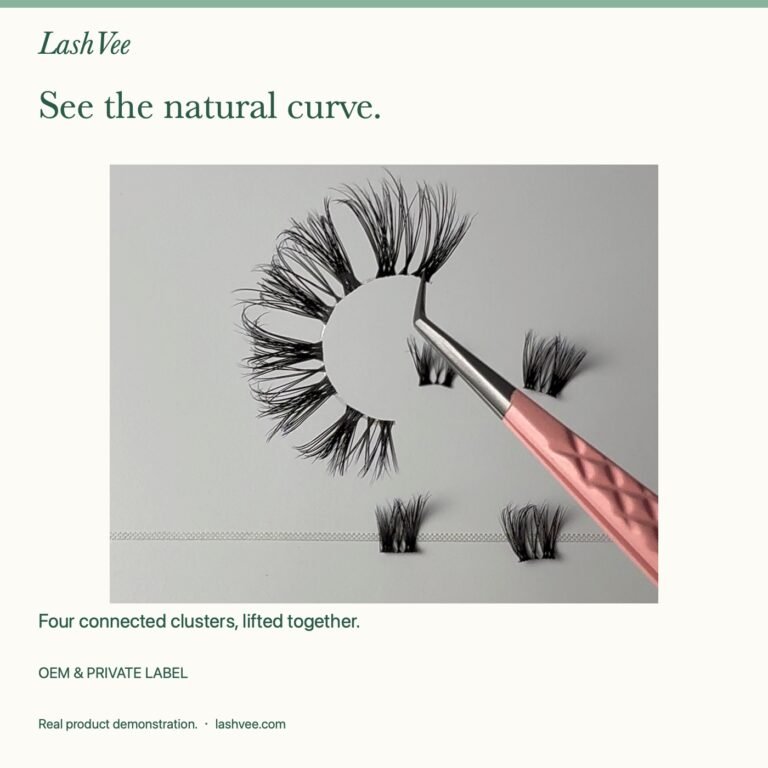
Cluster lashes are small groups of lash fibers pre-bonded together at the base. Instead of attaching one extension per one natural lash, you’re placing a segment—often along the lash line or under the lash line—using a temporary lash adhesive or “bond & seal”-style system.
What you can do today: If you like clusters, treat them like a short-wear beauty accessory, not a “set it and forget it” extension service.
Volume lashes (professional volume lash extensions)
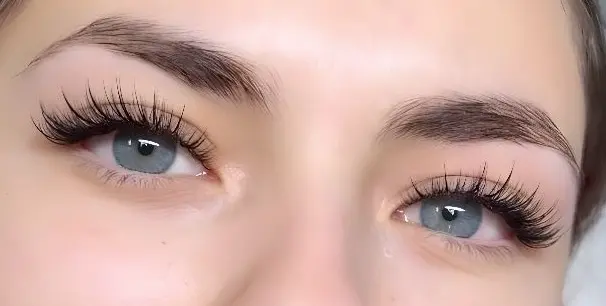
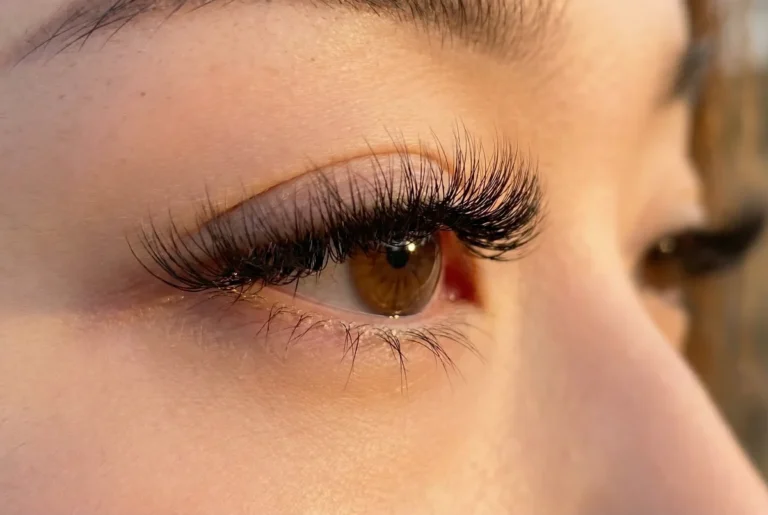
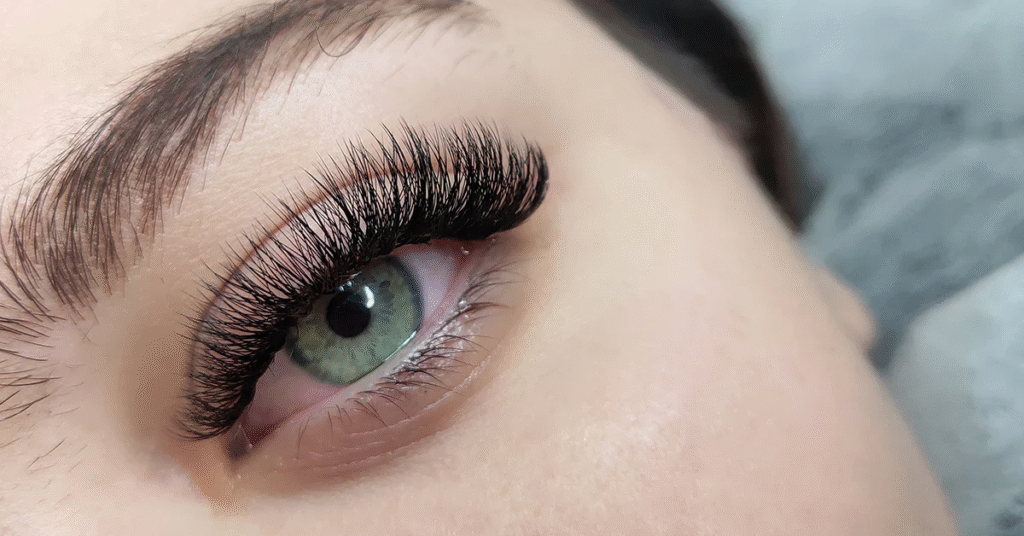
Volume lashes are a technique, not just a look: an artist isolates one natural lash and attaches a lightweight “fan” (multiple ultra-fine extensions) to that single lash. Done well, volume is about weight balance and clean isolation, so the natural lash can shed normally.
What you can do today: If you’re shopping for volume, ask one simple question: “Do you isolate one natural lash per fan?” (If the answer is vague, that’s a signal.)
The misconception: “Clusters are basically volume.”
They can look similar, but the attachment mechanics are different—clusters can connect multiple lashes, while volume fans are placed on one isolated lash.
Do Cluster Lashes Damage Natural Lashes?
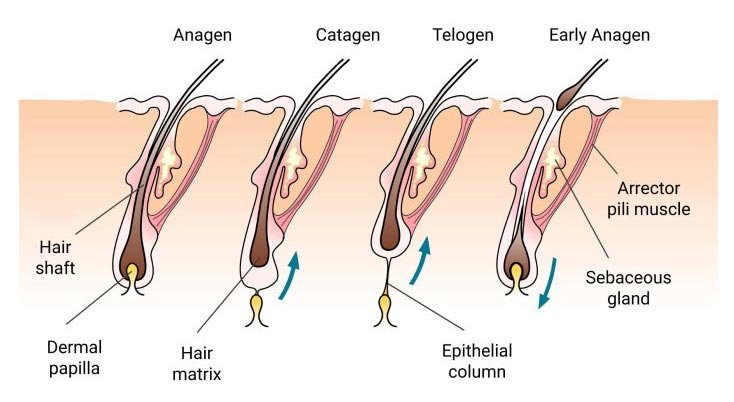
Cluster lashes don’t automatically “damage” lashes—but they increase risk when they create the wrong mechanics on a system that’s always changing. Your natural lashes are constantly growing and shedding, and neighboring lashes can be at different stages. If an enhancement links multiple lashes together, those lashes can tug on each other as they grow and shed.
The most common cluster-related risk factors we see are:
1. Bridging (multiple natural lashes stuck together)
Clusters are pre-bonded at the base, so it’s easy for them to catch and connect to more than one natural lash—or to sit so close to the lash line that several lashes move as one unit.
What you can do today: brush slowly from underneath and from above. If the lashes don’t separate, don’t “rip them apart.” Cleanse and consider removing that segment.
2. Concentrated force + friction
A cluster base can act like a small rigid anchor. When you sleep on your face, rub your eyes, or tug at a loosening segment, the force transfers into the lash line.
What you can do today: if you’re a side sleeper, avoid long, heavy outer corners. Use slightly shorter segments on the outer third to reduce friction.
3. Removal habits (this is the big one)
Most thinning stories come from peeling clusters off before the adhesive releases.
What you can do today: set a removal rule: if a cluster is lifting, you either re-bond properly or remove gently—never half-pull it and “hope it holds.”
When to switch to volume instead: If you know you pick at lashes, hate cleansing, or try to stretch wear beyond what your adhesive can support, volume extensions (professionally applied and removed) often produce better lash-health outcomes over time.hoose, plan your “lash routine” around maintenance and removal, not just application.
Cluster lashes: where they shine—and where problems usually start
Why clusters feel so easy
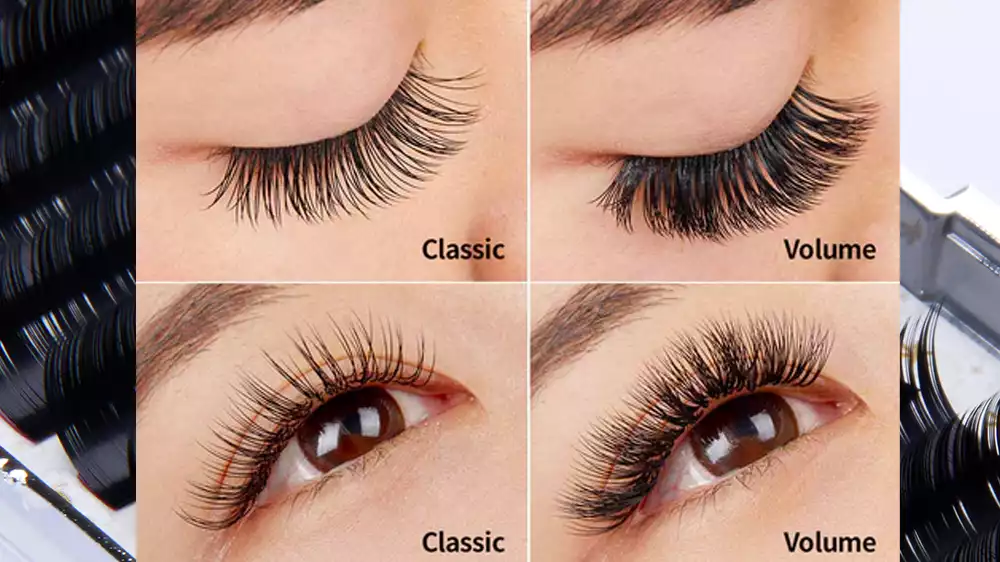
Clusters are popular because they solve a real problem: you can get a dramatic lash look fast, at home, with flexible mapping (cat eye, doll eye, manga spikes, etc.). Lashvee’s own DIY cluster styles are marketed around that kind of quick customization.
What you can do today: Use clusters as a “look builder.” Mix lengths across the lash line instead of stacking layers on top of each other (stacking increases stiffness and friction).
The biomechanics issue: “bridging” and concentrated force
Clusters often contact more than one natural lash (or sit so close to the lash line that they effectively behave like a mini strip). That can create:
- Bridging: multiple natural lashes linked together, so they can’t shed independently.
- Concentrated force: the base of the cluster can behave like a small rigid “anchor,” and friction from sleeping or rubbing transfers force to the lash line.
What you can do today: If you notice any “tight” feeling, poking, or that your lashes don’t separate when you gently brush them, take that as a removal signal—not something to push through.
The hygiene reality: clusters can trap “stuff”
Clusters—especially under-lash placement—create extra surfaces where oil, eyeliner, skincare residue, and dust can accumulate. If you wear them continuously, you’re basically wearing a tiny debris catcher near a sensitive mucosal area.
The fix is simple: build cleansing and rest days into your routine.
What you can do today: If you wear clusters, schedule at least one “clean lash day” per week (no clusters, no heavy mascara), and prioritize gentle cleansing around the lash line.
The removal trap (where most damage happens)
Most cluster-related lash thinning stories we hear aren’t from the cluster itself—they’re from peeling or pulling when adhesive hasn’t fully released.
Poison Control explicitly warns that removing semi-permanent extensions at home can pull out natural lashes and suggests professional removal when possible.
What you can do today: If you’re a habitual “picker,” clusters may not be your safest daily option. Consider reserving them for weekends or events.
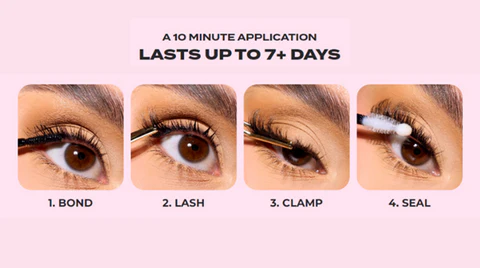
Volume lashes: what “healthy volume” actually means in practice
Good volume is about weight math, not drama
A well-made volume fan uses multiple thin fibers so the total weight stays appropriate for the natural lash. When volume goes wrong, it’s usually because of:
- too much adhesive,
- too heavy a fan for that client’s lash diameter,
- poor direction/attachment angle,
- or (big one) poor isolation leading to stickies.
What you can do today: When you’re evaluating an artist (or training a team), make “clean isolation” a non-negotiable quality standard. Even one sticky per eye adds up over a full set.
Why professional technique matters for the eye surface
Eyelash extensions are applied close to the ocular surface environment. In a prospective study of 32 participants, most reported ocular symptoms shortly after eyelash extensions (foreign body sensation was common), and tear break-up time decreased at one week—suggesting short-term tear film instability in some cases.
That doesn’t mean “extensions are bad.” It means placement, material, and aftercare matter—and some clients will be more sensitive than others.
What you can do today: If you’re prone to dry eye symptoms, ask for a slightly longer distance from the lid margin and a lighter, more breathable design (and be ready to pause if irritation appears).
How Long Do Cluster Lashes Last vs Volume Lashes?
Wear time depends on your skin oils, cleansing habits, sleep position, and how gently you handle your eyes—but we can still set realistic expectations.
Cluster lashes (DIY segments): Most people get the best results when they treat clusters as short-wear. If you’re aiming for multiple days, the biggest retention killers are oily skincare near the lash line, skipping cleansing, and rubbing at night.
What you can do today: if you want clusters to look good longer, build a “day-2 refresh” habit: brush, cleanse the lash line gently, and replace only the outer-corner segments that loosen first—don’t stack extra layers.
Volume lash extensions (professional): Volume extensions are designed for multi-week wear, but “lasting” usually means you’ll need fills every 2–3 weeks to keep the set looking full.
What you can do today: plan retention around your calendar: if you need lashes to look their best on a specific date, book a fill a few days before—not after the set starts looking sparse.
Simple decision rule: If you want lashes that survive a busy week with minimal daily effort, volume tends to win. If you want different looks across different days, clusters win.
Adhesive science: the part nobody wants to talk about (but should)
Adhesives are where “cluster vs volume” becomes a genuine safety discussion—because the chemistry differs.
Cluster adhesives (often) vs extension adhesives (typically)
- Temporary lash adhesives (common for strip/cluster use) can include solvents, surfactants, and other ingredients that may be irritating if misused.
- Extension adhesives are typically cyanoacrylate-based, which polymerize quickly in the presence of moisture and can irritate in liquid/fume form.
What you can do today: If you’re DIY-ing clusters, never “upgrade” by using random industrial glues. If you’re doing volume, make sure the adhesive is designed for professional lash extension use (and used with ventilation).
Allergic contact dermatitis is real (and often delayed)
A key point many people miss: allergy can appear after repeated exposure, not necessarily the first time.
- A case report documented allergic contact dermatitis linked to ethyl 2-cyanoacrylate (ECA) in eyelash extension glue, confirmed via patch testing.
- A systematic review focusing on acrylates like HEMA highlights that occupational exposure risks can be significantly higher for professionals than for consumers—meaning lash artists and salon staff need their own safety protocols, not just client-facing ones.
What you can do today (clients): If you develop eyelid redness, swelling, itching, or flaking after lash services or DIY adhesives, stop use and get evaluated by a clinician (dermatology or ophthalmology). Don’t try to “push through” with repeated applications.
What you can do today (pros/salons): Treat adhesive exposure like an occupational hazard: gloves when appropriate, avoid skin contact, and prioritize ventilation.
Formaldehyde: why “formaldehyde-free” labels can still confuse people
This is a sensitive topic, so we’ll stick to what’s published. In one study of 37 eyelash glues (consumer and professional), formaldehyde release was detected in some consumer glues and in a majority of professional glues tested using the chromotropic acid method.
Formaldehyde sensitivity note: Some testing has detected formaldehyde release in certain lash glues. If you know you’re sensitive, discuss it before application and ask for ingredient/SDS information where available.
What you can do today: If you have known formaldehyde sensitivity, discuss it before booking, and ask whether the salon has experience managing sensitive clients (and whether they can provide ingredient/SDS information where applicable).
Which Is Safer for Sensitive Eyes or Dry Eye?
If your eyes tend to feel dry, itchy, or reactive, the “safer” option usually depends on what triggers you: fumes, debris trapping, or mechanical rubbing.
- Clusters can irritate sensitive eyes when they sit very close to the lash line and trap oils, makeup, or residue—especially if you skip cleansing.
- Volume extensions can irritate when adhesive fumes or placement is too close, or when isolation isn’t clean (stickies can feel “pull-y” as lashes grow).
What you can do today: whichever you choose, use the “comfort rule”: lashes should feel light and forgettable. If you constantly feel them, something is off.
Stop signs (remove / seek professional advice)
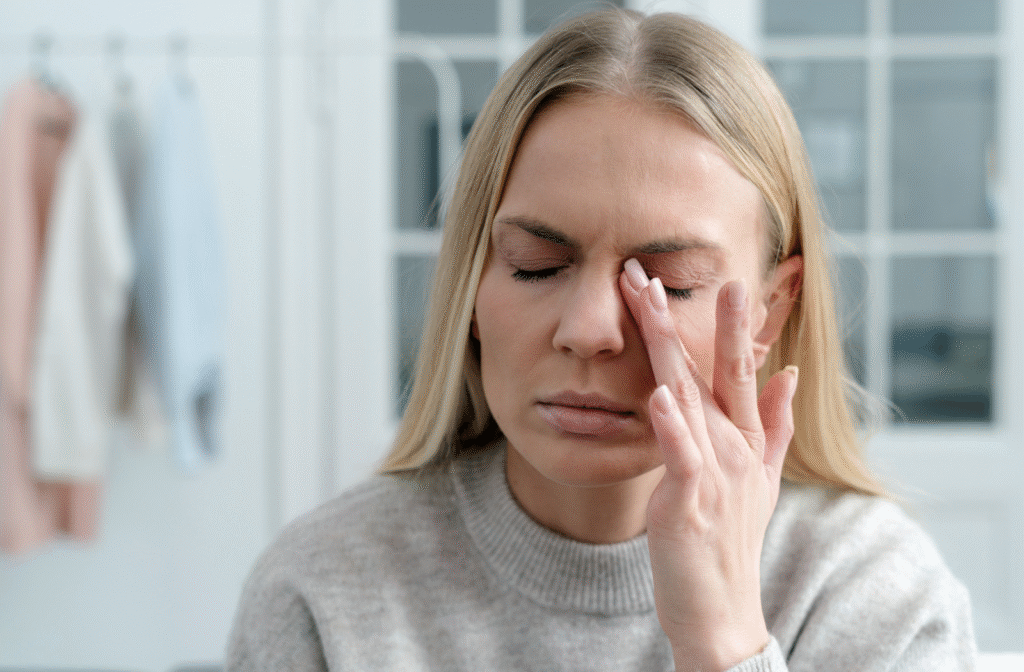
If you have sharp pain, significant swelling, worsening redness, discharge, light sensitivity, or blurred vision, don’t try to “wait it out.” Remove the enhancement safely (no ripping), and seek evaluation by an eye-care professional.
Best practice for sensitive users: choose lighter designs, keep a little distance from the lid margin, cleanse regularly, and schedule rest days if you’re doing clusters.eye exposure to lash adhesives and medical evaluation if symptoms persist.
Aftercare That Improves Retention for Both (DIY + Salon)
If we had to pick one habit that improves both retention and comfort, it’s this: clean your lash line gently and consistently. Clean lashes hold better and feel better.
For cluster lashes
- Clean-lash breaks: schedule at least one no-cluster day weekly.
- Replace, don’t stack: if you want more drama, swap in longer segments instead of stacking layers.
- Night routine: brush, check for lifting corners, and fix or remove—don’t sleep with a half-loose segment.
For volume extensions
- Cleansing is retention: gentle lash cleansing reduces oil buildup that weakens bonds.
- Brush daily: especially after showering or workouts.
- Fill strategy: book fills before the set looks sparse if you want a consistently full look.
What you can do today: add a 60-second “lash check” to your nightly routine: cleanse → brush → spot-check comfort. This prevents most “day-7 regret” scenarios.
For Lash Artists & Salons: When to Recommend Clusters vs Volume
If you’re a salon owner, distributor, or brand, “cluster vs volume” is also an operations question.
When clusters make business sense
Clusters fit well when you want:
- a retail-friendly add-on (impulse buy, “weekend lash”),
- lower training barriers,
- fast customer results.
What you can do today: Position clusters honestly as short-wear and educate on removal. Most refund/complaint cycles we see come from “I wore them too long” + “I peeled them off.”
When volume makes business sense
Volume fits when you want:
- high service value,
- strong client retention (fills),
- premium positioning.
What you can do today: Build a simple QA checklist for your artists: isolation, direction, adhesive control, and lash health assessments at every fill.
Don’t forget staff health
Occupational respiratory reactions have been reported with cyanoacrylate-based eyelash extension glues, including occupational asthma/rhinitis case reports.
What you can do today: Even one small step—improving ventilation at lash beds—can reduce repeated fume exposure over a workweek.
So…which one should you choose? A practical decision framework
Choose cluster lashes if you want…
- Speed and flexibility: You like changing your lash look often.
- Lower commitment: You want lashes for a trip, event, weekend, or content shoot.
- DIY control: You prefer doing things at home.
Your best move: Treat clusters as “wear and remove,” not “wear forever.” If you want daily use, rotate days off.
Choose volume lashes if you want…
- Longer continuous wear: You want to wake up with lashes for weeks, not days.
- Customization with stability: You want density without heavy strip-like bases.
- Professional oversight: You want someone else managing isolation, weight, and direction.
Your best move: Invest in the artist, not just the style. “Volume” done poorly is worse than clusters done carefully.
Choose neither (for now) if…
- you’re currently having eyelid inflammation, unexplained irritation, or recurring infections,
- you’re dealing with new dry eye symptoms that haven’t been evaluated,
- you know you’re allergic to common adhesive families.
Your best move: Pause enhancements and consult an eye-care professional.
When medical care (or veterinary care) is needed
We can’t diagnose online, and we don’t recommend self-treating eye conditions. If you have pain, vision changes, significant swelling, or discharge, see an ophthalmologist/optometrist promptly.
And because lash products are often used around homes with pets: if a child or pet ingests lash adhesive or gets it in the eyes, contact Poison Control or a veterinarian immediately (pets can’t tell you what they’re feeling, and prompt guidance matters).
Key takeaways (save this for your next lash decision)
- Clusters = fast + flexible, but they’re best treated as short-wear with careful removal.
- Volume = technique + balance (isolation and weight distribution are the whole game).
- Adhesives drive most irritation problems—and allergy can develop after repeated exposure.
- Some lash glues can release formaldehyde, even when not obviously labeled, which matters for sensitized individuals.
- If lashes hurt, poke, or make your eyes red: stop and reassess—beauty should never come with eye pain.
Frequently Asked Questions: Cluster Lashes vs Volume Lashes
How long do cluster lashes last vs volume lash extensions?
In day-to-day use, cluster lashes are usually treated as short-wear (days), while professional volume lash extensions are designed for multi-week wear with regular fills. What “lasts” depends on your lash cycle, your cleansing habits, and how much friction your lashes get from sleep or rubbing.
What you can do today:
- If you choose clusters, plan a routine removal day (don’t push them until they start peeling).
- If you choose volume, plan on fills every 2–3 weeks to keep the set looking consistent.
- Track one week of habits (oil cleanser, sauna, side-sleeping) and note what changes retention most for you.
Do cluster lashes damage natural lashes?
Clusters don’t automatically “damage” lashes—but the risk goes up when (1) multiple natural lashes get stuck together (“bridging”), or (2) clusters are peeled off before adhesive releases. Most lash thinning stories we hear are removal-related, not “the fiber itself.”
What you can do today:
- If you’re a habitual picker, treat clusters as occasional wear, not a daily habit.
- If clusters feel “tight,” pokey, or hard to brush through, take it as a removal signal.
- Make removal part of the plan (remover ready, time set aside), not an afterthought.
What is “bridging,” and how can I tell it’s happening?
“Bridging” is when an enhancement causes two or more natural lashes to behave like one unit. Because lashes grow and shed at different rates, bridging can create tension over time.
What you can do today:
- Gently brush from base to tip: if several lashes move as one “sheet,” that’s a bridging clue.
- Look for tiny “webbing” at the base where lashes don’t separate.
- If you suspect bridging, don’t tug—remove and reset.
Can I sleep in cluster lashes?
Some people do, but sleeping in clusters increases friction (pillow + lash base) and can reduce comfort and retention. If you wake up with poking, twisting, or tightness, your lashes are telling you the setup isn’t stable for overnight wear.
What you can do today:
- If you want to sleep in lashes, keep the design lighter (fewer segments, not stacked).
- Use a silk/satin pillowcase and try to avoid face-down sleeping.
- If you wake up irritated, don’t “re-glue over it”—remove, cleanse, and reassess.
How do I remove cluster lashes safely without pulling lashes?
Safe removal is slow removal. Pulling is what usually causes problems.
What you can do today:
- Use the remover that matches your adhesive system (bond/seal systems often need their specific remover).
- Apply remover and wait long enough for release (set a timer; rushing leads to tugging).
- Slide clusters off gently—if you feel resistance, add more remover and wait again.
- After removal, cleanse your lash line and take a “clean lash” day if your eyes feel tired.
Are volume lashes safer than clusters?
Not automatically. Volume can be very lash-friendly when done correctly (one isolated natural lash per fan, controlled adhesive, good direction). But poor isolation (“stickies”) or too-heavy fans can create stress—just like poor cluster placement/removal can.
What you can do today:
- Ask your lash artist: “Do you attach one fan to one isolated natural lash?”
- Ask what they do if they find stickies during a fill (a good answer includes checking and separating).
- If you’re sensitive, request a lighter set and slightly more distance from the lid margin.
Can I wear mascara with clusters or volume lashes?
You can, but it often reduces retention and makes cleansing harder—especially with waterproof formulas, which are tougher to remove without friction.
What you can do today:
- If you want extra drama, choose lash mapping (length/shape changes) instead of mascara.
- If you must use mascara, go light and prioritize gentle cleansing afterward.
- Avoid heavy, oily removers right at the lash base unless you’re intentionally removing the lashes.
What should I ask my lash tech to avoid “stickies” and irritation?
A great set starts with technique and hygiene, not just style.
What you can do today:
- Ask: “How do you check for stickies before I leave?”
- Ask: “How do you adjust for sensitive eyes (distance, lighter fans, aftercare)?”
- If you feel poking immediately, speak up before you leave—early fixes are easier than living with discomfort.
When should I stop wearing lashes and see a doctor?
Stop and seek medical evaluation if you have sharp pain, significant swelling, worsening redness, discharge, light sensitivity, or blurred vision—especially if symptoms don’t improve quickly after removal and gentle rinsing. We can’t diagnose online, and eye issues can escalate fast.
What you can do today:
- Remove lashes safely if you can (don’t rip).
- Rinse the eye gently if you suspect product contact.
- Seek care from an optometrist/ophthalmologist if symptoms persist or vision is affected.
What if lash adhesive gets into a child’s or pet’s eye?
Treat it as urgent. Eyes and adhesives are a bad combination, and kids/pets can’t always communicate discomfort clearly.
What you can do today:
- Start gentle rinsing and contact local poison control / a medical professional for humans.
- For pets, contact a veterinarian promptly.
References (APA)
Amano, Y., & Nishiwaki, Y. (2013). National survey on eyelash extensions and their related health problems. Nihon Eiseigaku Zasshi, 68(3), 168–174.
Han, J., Xie, Z., Zhu, X., Ruan, W., Lin, M., Xu, Z., Miao, L., Zhong, J., Lu, F., & Hu, L. (2024). The effects of eyelash extensions on the ocular surface. Contact Lens and Anterior Eye, 47, 102109.
Lindström, I., Suojalehto, H., Henriks-Eckerman, M.-L., & Suuronen, K. (2013). Occupational asthma and rhinitis caused by cyanoacrylate-based eyelash extension glues. Occupational Medicine, 63(4), 294–297.
Pei, D. N., & Troutman, W. G. (n.d.). Is eyelash glue toxic? Poison Control. (Retrieved 2025-12-31).
Symanzik, C., Weinert, P., Babić, Ž., Hallmann, S., Havmose, M. S., Johansen, J. D., Kezic, S., Macan, M., Macan, J., Strahwald, J., Turk, R., van der Molen, H. F., John, S. M., & Uter, W. (2022). Allergic contact dermatitis caused by 2-hydroxyethyl methacrylate and ethyl cyanoacrylate contained in cosmetic glues: A systematic review. Contact Dermatitis, 86(6), 480–492.
Ueda, S., Hattori, J., Masuda, K., Katoh, N., Sasaki, K., & Mineoka, R. (2017). A case of contact dermatitis caused by eyelash extension glue. Journal of Environmental Dermatology and Cutaneous Allergology, 11(4), 316–321.
Xiong, M., Shaik, J. A., & Hylwa, S. (2022). Formaldehyde release from eyelash glues: Analysis using the chromotropic acid method. Dermatitis, 33(6), 442–446.