
As an eyelash manufacturer working with private labels, studios, and distributors, we see the same questions come up repeatedly—what exactly is the difference between C curl and D curl, and why does the same length look so different once the curl changes?
From a production and application standpoint, curl is not a styling preference. It is a structural parameter that directly affects projection, eye openness, client comfort, and consistency once lashes are produced and used at scale. Misunderstanding curl often leads to mismatched expectations, uneven results in the studio, or unnecessary product returns in wholesale programs.
This article explains C curl and D curl from a technical and practical perspective. We focus on what each curl actually does, how it changes the final lash look, where each works best, and the most common misconceptions we see in real-world use—so you can make clearer decisions whether you are selecting lashes for clients or sourcing them for your brand.
What Are C Curl Lashes?
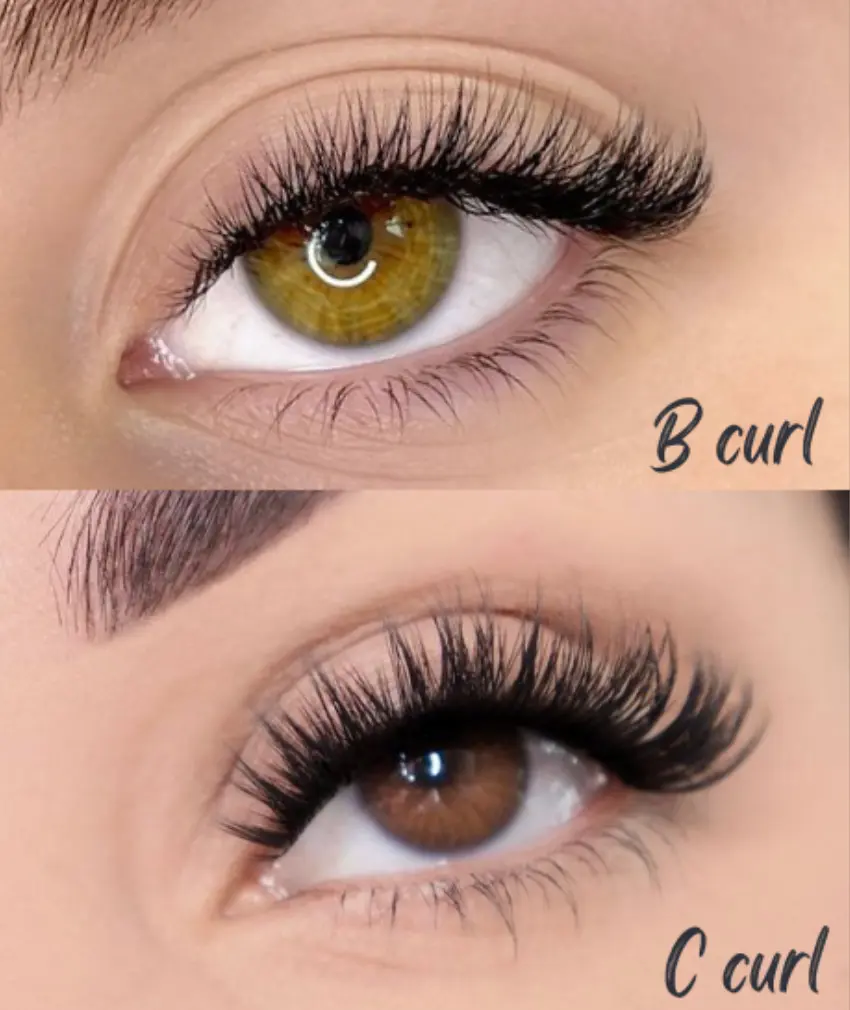
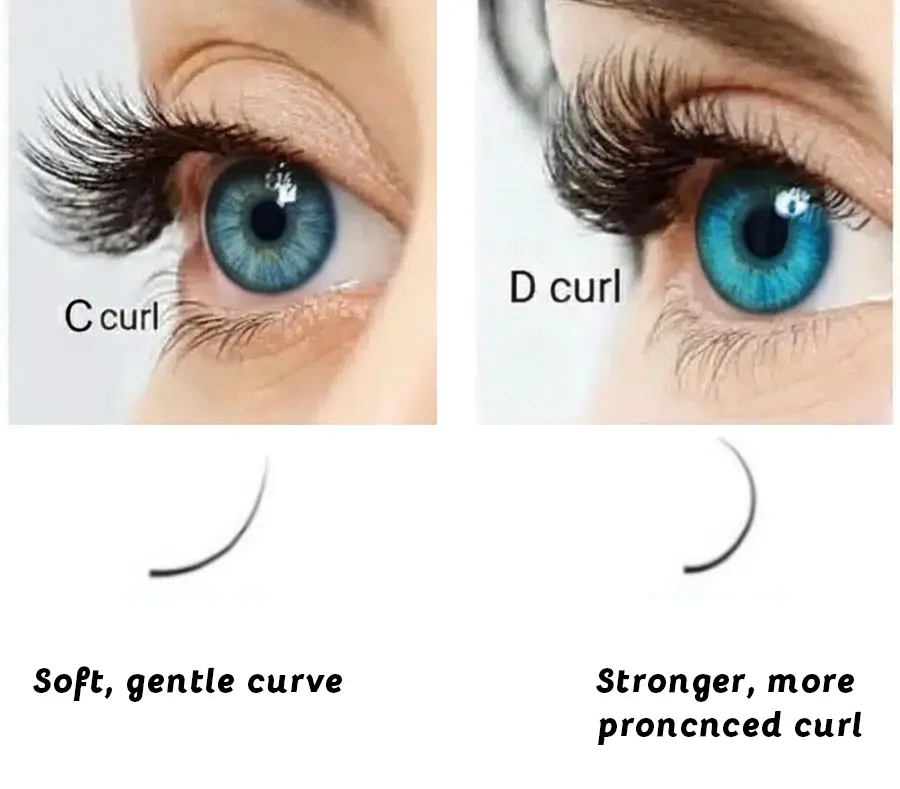
C curl lashes are extensions with a medium curl angle that lifts the natural lash gently upward, creating visible openness without pushing the lash line too far forward.
In practical terms, C curl sits between a soft natural bend and a dramatic lift, which is why it has become a default option in many studios once production moved beyond small batches.
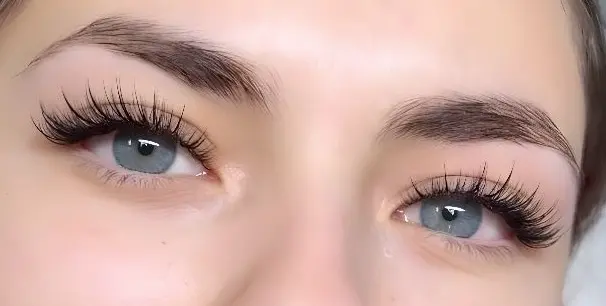
Visually, C curl creates a smooth arc that follows the eye’s natural contour. The lash tips are clearly visible from the front, but the base still lies comfortably along the lash line. This balance is what makes C curl adaptable across everyday wear, professional environments, and light glam sets. When produced at scale, its tolerance for minor mapping variation also makes it forgiving in wholesale and retail launch scenarios.
Because the curl is present but controlled, C curl works especially well when the goal is to enhance eye shape rather than redefine it. It opens the eye without changing the perceived direction of the lash line.
C curl is commonly chosen for:
- Clients seeking a noticeable but wearable lift
- Straight or slightly downward-pointing natural lashes
- Classic, hybrid, or soft volume sets used for daily wear
What Are D Curl Lashes?
D curl lashes feature a stronger upward curl that lifts sharply from the base, creating immediate vertical emphasis above the lash line.
Rather than following the natural lash trajectory, D curl intentionally redirects the eye upward, which is why it exists as a functional design—not a decorative one.
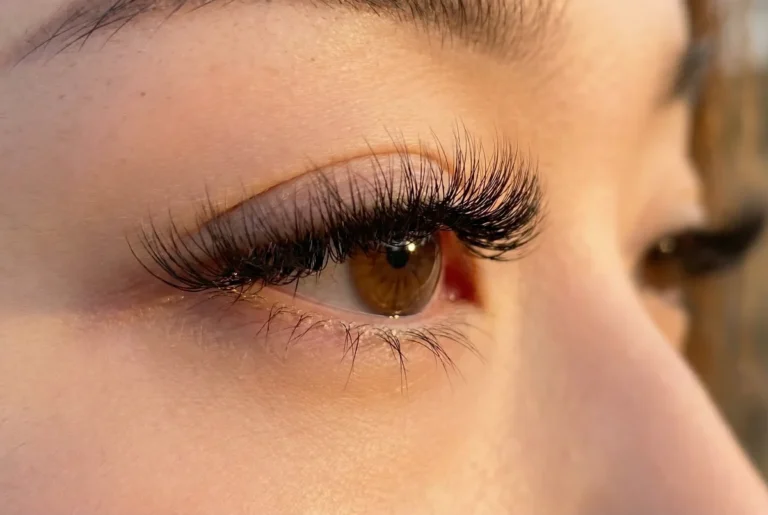
The visual effect is more pronounced eye opening, especially from the front view. The lash tips sit higher, making the whites of the eyes more visible and reducing the appearance of heaviness on the upper lid. This is particularly valuable for eye shapes where the lid naturally folds over the lash line or where makeup tends to disappear once the eye is open.
D curl is often requested when makeup style, facial structure, or eye anatomy requires extra lift to achieve clarity. In private label development, it’s typically positioned as a targeted solution rather than a universal curl.
C Curl vs D Curl Lashes: Key Differences at a Glance
| Aspect | C Curl Lashes | D Curl Lashes |
|---|---|---|
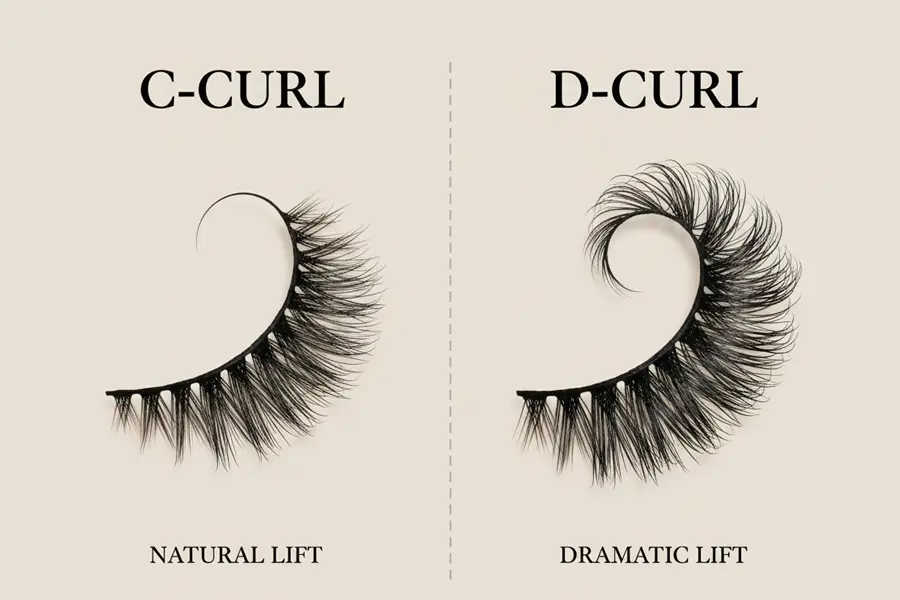
| Curl intensity | Medium, controlled lift | Strong, upward lift |
| Visual effect | Open, balanced, eye-enhancing | Bold eye opening, vertical emphasis |
| Best for eye shapes | Almond, slightly hooded, downturned | Hooded, monolid, deep-set |
| Makeup style compatibility | Everyday makeup, soft glam | Full glam, liner-heavy looks |
| Client comfort perception | Feels natural and familiar | Feels lifted and more structured |
| Common use cases | Daily wear, office-friendly sets | Event makeup, dramatic framing |
Why Curl Definitions Alone Are Not Enough
In theory, C curl and D curl are clearly defined categories. In practice, curl is not a fixed value—it is a controlled range shaped by tooling, fiber behaviour, and production tolerance.
From a manufacturing perspective, curl is created through heat setting and mould curvature. Small variations in mould angle, heating time, or fiber elasticity can shift how a curl behaves once it is removed from the tray and applied to a natural lash. This is why two products both labelled “C curl” may perform differently in real application, even when length and thickness are identical.
Another factor often overlooked is curl recovery. Some fibers relax slightly after unpacking or during application, while others hold their shape more aggressively. This difference rarely shows up in product descriptions, but it directly affects the final look on the eye—especially for D curl, where even minor relaxation changes the perceived lift.
For this reason, professional lash artists and buyers do not evaluate curl in isolation. They look at how the curl behaves after removal, how it responds when bonded to natural lashes, and how consistent it remains across trays when used repeatedly in studio work.
Understanding this helps explain why curl choice sometimes “fails” even when the label seems correct.
When Curl Choice Fails: Situations Where C or D Curl Doesn’t Perform as Expected
Curl selection problems are rarely caused by the curl itself. They usually happen when curl is chosen without considering how it interacts with length, natural lash direction, and application angle.
One common scenario is pairing D curl with excessive length. While D curl provides strong lift, combining it with long extensions can cause the lash tips to project too vertically. The result is a stiff or crowded appearance that clients may describe as heavy or uncomfortable—even though the curl itself is doing exactly what it is designed to do.
Another frequent issue appears with C curl on very straight or downward-pointing natural lashes. In these cases, C curl may visually disappear once the eye opens, because the curl follows the lash rather than redirecting it. Clients may feel the set looks flatter than expected, even when length and density are correct.
Application angle also plays a critical role. A high curl applied at the wrong angle can press into the eyelid or feel unstable during wear. Conversely, a well-matched curl applied with correct isolation and direction often feels lighter and more comfortable, regardless of curl strength.
These situations illustrate an important point: curl effectiveness depends on context. Curl does not override poor pairing decisions—it amplifies them.
How Curl Interacts with Length, Diameter, and Mapping
Curl choice becomes most impactful when combined with other design variables. Length, diameter, and mapping determine how curl is perceived, not just how it measures.
With shorter lengths, the difference between C and D curl appears subtle but functional. D curl adds clarity and lift, while C curl maintains softness. As lengths increase, the difference becomes more dramatic. D curl shortens forward projection, making long lashes appear more upright, while C curl allows length to extend outward before lifting.
Diameter influences curl perception as well. Thicker fibers hold curl more rigidly, which can make D curl appear firmer and more structured. Finer diameters soften both C and D curl, often reducing the visual gap between them.
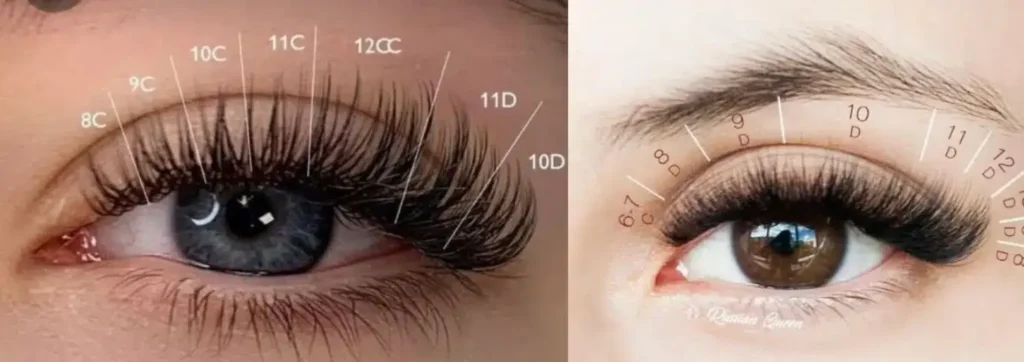
Mapping further modifies the outcome. Central emphasis with D curl creates a wide-eyed effect, while outer-corner placement requires more restraint to avoid over-lifting. This is why advanced sets often mix curls—not for decoration, but to control how the eye reads from different angles.
When these factors are considered together, curl selection becomes predictable rather than experimental.
How Curl Choice Affects the Final Lash Look
Curl choice has a disproportionate impact on the final result, even when length, thickness, and mapping stay exactly the same. With identical lash maps, switching from C curl to D curl can completely change how the eye reads.
The reason lies in projection. C curl extends outward before lifting, which elongates the eye horizontally. D curl lifts earlier and more aggressively, which shortens the forward projection and emphasizes height instead. This changes not only how long the lashes appear, but also how close or open-set the eyes look.
In real-world application, this means curl selection should be treated as a structural decision, not a styling afterthought. Once production moves beyond small batches, experienced buyers quickly learn that curl consistency matters as much as fiber or band quality in controlling outcomes.
C Curl or D Curl: Which Is Better for Different Eye Shapes?
Almond Eyes
Almond eyes already have a balanced structure, so C curl is the more common choice. It enhances openness without altering the natural symmetry. D curl can still be used, but usually in the centre for accent rather than across the full set.
Hooded Eyes
Hooded eyes often hide the lash base when the eye is open. D curl is frequently selected here because its early lift pushes the lashes above the fold, keeping them visible throughout the day.
Downturned Eyes
C curl works well when placed with careful outer-corner mapping to avoid exaggerating the downward angle. In some cases, a small section of D curl in the centre can help rebalance the eye without over-lifting the ends.
Monolids
Monolids benefit from curl strength more than length. D curl is commonly used because it creates separation from the lid and prevents lashes from pressing flat against the skin.
Common Misconceptions About C Curl and D Curl Lashes
One common assumption is that D curl always looks unnatural. In reality, it only looks excessive when paired with unsuitable lengths or incorrect mapping. Used correctly, it can appear clean and intentional.
Another misconception is that C curl looks natural on everyone. For eyes with heavy lids or very straight natural lashes, C curl may disappear once the eye is open, delivering less lift than expected.
There is also a belief that stronger curl equals poorer retention. Retention is influenced more by application angle and natural lash direction than curl type itself.
Professional Tips: How Lash Artists Choose Between C and D Curl
Experienced lash artists rarely choose curl in isolation. They evaluate natural lash direction, lid movement, habitual makeup style, and how the client wants their eyes to read in real life—not just in photos.
From a manufacturing and wholesale perspective, professionals also look at consistency across trays. Curl deviation of even a few degrees can shift a C curl toward a weak D or vice versa, affecting results once scaled into retail or private label distribution.
This is why curl definition, tooling accuracy, and quality control matter long before lashes reach the studio.
What to Look for When Sourcing C and D Curl Lashes
For buyers and private label developers, curl consistency matters as much as style variety. A well-defined curl that varies between trays introduces inconsistency at the application level.
Professionals typically evaluate:
- Curl uniformity within a tray, ensuring the lash line remains even
- Recovery after unpacking, especially for higher curls
- Stability over time, as curl relaxation affects long-term inventory use
Reliable curl behaviour reduces adjustment time for artists and helps maintain consistent results across clients. This is particularly important once products move into wholesale distribution or repeat retail orders, where predictability becomes more valuable than novelty.
FAQ: C Curl vs D Curl Lashes
Which curl looks more natural, C curl or D curl?
Neither curl is inherently more natural—the result depends on eye shape, natural lash direction, and length selection. C curl is often perceived as more natural because it follows the eye’s contour, but on hooded or monolid eyes it may disappear once the eyes are open. In those cases, D curl can look cleaner and more balanced because the lift restores visibility rather than adding drama.
Can beginners wear D curl?
Yes, especially if their eye shape benefits from added lift. The key is moderating length and density.
Does D curl fall faster?
No. When applied correctly, retention depends on lash health and adhesive bonding, not curl strength.
Can I mix C and D curl in one set?
Yes. Mixing curls is common in advanced mapping to balance lift and softness across the eye.
Does curl affect how long lashes look?
Yes. Curl changes perceived length. D curl lifts earlier and reduces forward projection, which can make lashes appear slightly shorter than the same length in C curl. C curl allows more horizontal extension before lifting, often creating a longer visual line.
Is D curl suitable for clients with very straight natural lashes?
Often, yes. Straight natural lashes may not hold visible lift with C curl once the eyes are open. D curl redirects the lash upward, improving visibility and eye opening when applied at the correct angle.
Why does the same curl feel different between brands?
Because curl is a controlled range, not a fixed value. Differences in mould curvature, heat-setting processes, and fiber elasticity all affect how a curl performs after unpacking and during wear.