
The fox eye look has moved well beyond its early life as a social-media trend. Today, it stands as a mature lash category with stable demand across professional studios, private label brands, and wholesale collections. Clients no longer ask for fox lashes out of curiosity—they ask for them because they already know what the result should look and feel like.
What determines whether fox lashes succeed in the market is not storytelling or trend language. It comes down to far more practical factors: design precision, material behavior, and consistency in production. Fox lashes reward control and expose shortcuts quickly.
This guide brings together visual design logic and real-world sourcing experience. It is written to explain not only what fox eyelashes look like, but why they work, where they most often fail, and how to select or develop them properly when production moves beyond small batches.
Fox Eyelashes as a Structural Design
At their core, fox eyelashes are about directional control, not decoration. The intention is to guide the eye outward and slightly upward, creating a long, narrow, lifted contour. This effect relies on horizontal elongation rather than vertical volume, which is what separates fox lashes from doll, round, or dramatic styles.
Well-designed fox lashes depend on three elements working together:
a controlled length gradient, predictable curl behavior, and a band strong enough to support outer-corner weight without stiffness. When any one of these elements is poorly executed, the fox effect collapses. This is also why fox lashes often reveal the difference between inexperienced production and mature manufacturing.
In practice, fox lashes should be treated as a precision product category, even when produced in volume.
How Fox Lashes Reshape the Eye in Practice
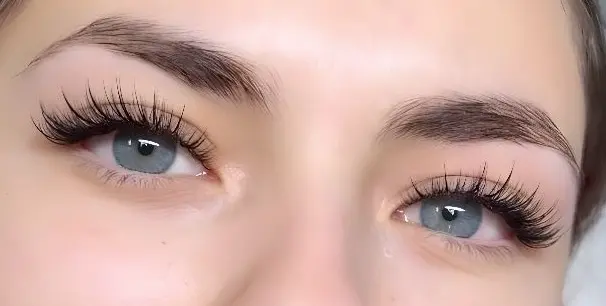
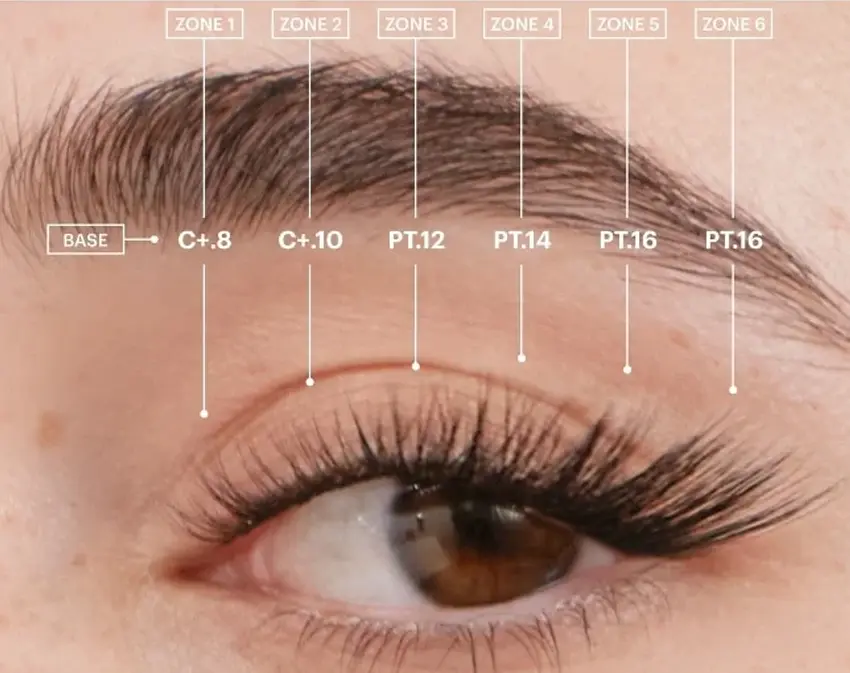
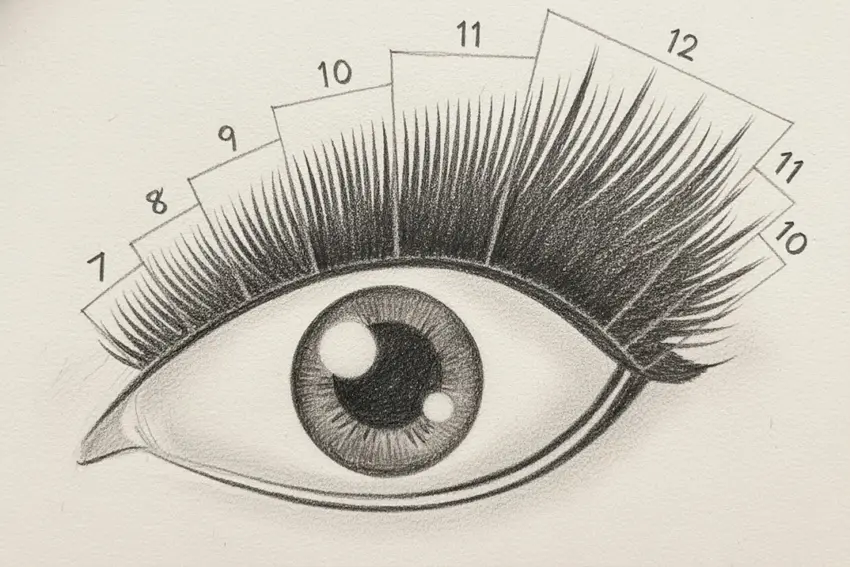
Unlike center-focused lash styles, fox lashes intentionally shift visual emphasis toward the outer third of the eye. Length increases gradually from the inner corner, reaches its peak slightly before or near the outer corner, and often tapers subtly at the edge to prevent dragging the eye downward.
This controlled asymmetry is what creates the “snatched” effect commonly associated with fox eyes. When done correctly, the lashes look lighter than their actual length because the eye is visually stretched rather than thickened.
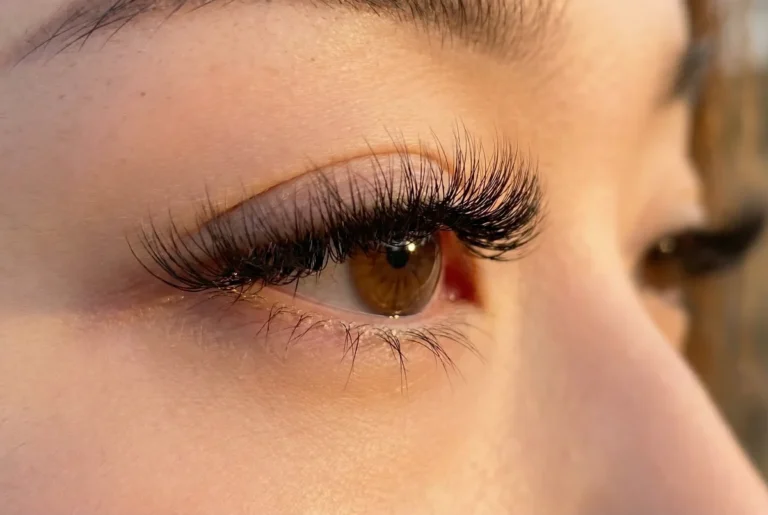
This also explains why fox lashes photograph so well. In profile and three-quarter angles, the elongation is clear and clean, without the need for heavy eyeliner or dense volume.
Why Fox Lashes Adapt Well Across Eye Shapes
One reason fox lashes have become a reliable product category is their adaptability. On almond-shaped eyes, they enhance natural symmetry. On monolids and hooded eyes, fox designs—particularly when paired with L or M curls—create visible lift where rounded curls often disappear beneath the lid. On slightly downturned eyes, careful tapering prevents heaviness while still correcting the outer angle.
This adaptability has very real commercial consequences. Styles that suit a wider range of eye shapes tend to generate fewer complaints, fewer returns, and more repeat purchases. A properly designed fox lash simply works for more people than highly specialized styles.
The Subtle Engineering Behind Fox Lash Mapping
Fox lash mapping is often simplified online, but professional results rely on small, deliberate decisions. The longest lashes are rarely placed at the extreme outer corner. Instead, peak length is positioned slightly inward, followed by a gentle reduction. This avoids the downward pull that can appear on mature or hooded eyes.
Direction also matters. Fox lashes are typically angled outward rather than straight up. This reinforces horizontal movement and keeps the eye looking open instead of crowded.
When fox lashes are developed for private label or OEM production, this mapping needs to be built into the product itself. Leaving it to chance is one of the most common reasons fox styles underperform once they reach retail.
Weight Distribution: The Variable Most Often Overlooked
Fox lashes concentrate visual and physical weight in the most sensitive area of the eye—the outer third. If fiber thickness or density is not controlled carefully, the lashes can feel heavier than their length suggests.
This becomes especially important for strip lashes and cluster styles intended for non-professional users. Application is rarely perfect. Designs that tolerate minor errors consistently outperform those that require ideal placement and adhesive control.
In practice, lighter fibers with stronger tensile strength perform better in fox designs than thicker fibers, even when overall lash length remains the same.
Curl Selection: Why Stronger Is Not Better
In fox lash design, curl strength matters less than curl behavior. Overly rounded curls such as D or DD lift the eye vertically, shortening the horizontal line and weakening the fox effect.
Most successful fox lashes rely on C or CC curls for general markets, while L or M curls are favored for monolid and hooded-eye structures. Curl memory becomes critical at scale. Poor heat-setting leads to flattening during shipping or storage, and the outer lashes—where structure matters most—are always the first to fail.
Lash Fibers: Why Fox Lashes Expose Material Weakness
Fox lashes place disproportionate stress on the outer fibers. These fibers are longer, more visible, and more exposed to deformation. Inferior materials twist, separate, or lose curl quickly, making flaws obvious to both professionals and end users.
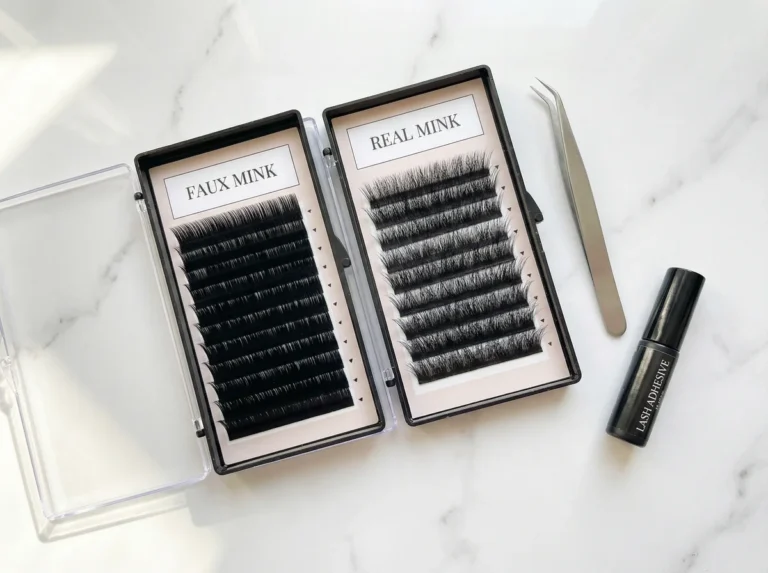
High-quality synthetic fibers, often referred to as faux mink or silk, are preferred not for branding reasons but because they offer consistent diameter, controlled taper, and stable curl retention. Matte or semi-matte finishes are especially important, as shine accumulates visually at the outer corner and makes lashes appear stiff.
Evaluating outer-corner performance under repeated stress is far more meaningful than reviewing general fiber samples.
Why Fox Lashes Look Different in Photos Than in Real Life
A common source of confusion comes from mismatched expectations between promotional images and real-world wear. This usually results from camera compression and lighting rather than misrepresentation.
Fox lashes are highly directional. Straight-on photos compress the elongation effect, while angled or moving views reveal it clearly. Brands that rely only on front-facing imagery often undersell the design and invite unnecessary confusion.
Including angled visuals dramatically improves understanding and satisfaction.
The Lash Band: Where Most Fox Lashes Fail
The lash band is the most underestimated component of fox lashes and one of the most frequent points of failure. Because weight is concentrated toward the outer third, the band must distribute tension evenly while remaining flexible.
Machine-glued bands often lack sufficient adhesive penetration, leading to early lifting or shedding at the outer corner. This is why higher-quality fox lashes frequently use hand-crafted or semi-handmade bands, where tension and bonding can be controlled more precisely.
Weak bands rarely fail quietly—they fail visibly.
Practical Reference: Fox Lash Specifications
| Element | Recommended Standard | Why It Matters |
|---|---|---|
| Length gradient | Smooth, progressive | Defines elongation |
| Peak placement | Slightly before edge | Prevents drooping |
| Fiber thickness | 0.03–0.07 mm | Balances weight |
| Fiber finish | Matte / semi-matte | Natural appearance |
| Curl types | C / CC / L / M | Maintains horizontal flow |
| Band structure | Thin, flexible, reinforced | Prevents outer lift |
| Curl retention | Heat-set, high memory | Shipping stability |
This framework is often used internally as a quality reference during development and production.
Production Reality: MOQ, Sampling, and Lead Time
Fox lashes require tighter control than basic styles. Samples are typically ready within one to two weeks. Private label quantities usually begin at a few hundred pairs per style, with lead times extending as customization increases.
Offers combining extremely low MOQ with full customization often rely on relabeled stock designs rather than true development.
Pricing and Positioning: Avoiding the “Too Cheap” Signal
Fox lashes justify mid-range to premium pricing because of their complexity. When priced too low, customers often question quality rather than feel rewarded.
They perform best when positioned as:
- core styles rather than clearance items
- repeat-use products rather than novelties
- designed solutions rather than generic lashes
This aligns with how fox lashes are actually used and repurchased.
Frequently Asked Questions
Are fox lashes suitable for large-scale retail?
Yes. Their adaptability and balanced appearance make them reliable long-term sellers.
Why do fox lashes sometimes look uneven when worn?
Most issues trace back to mapping inconsistency, weak band tension, or unsuitable curl choice.
Are fox lashes harder to manufacture?
They require more control, but also support stronger margins.
Do fox lashes need special packaging?
Clear style naming and simple guidance reduce misuse and returns.
Can one fox style serve all markets?
Most brands perform better with two or three variations.
Summary
Fox eyelashes are not forgiving products. They magnify precision and expose shortcuts quickly. That is exactly what makes them valuable. When designed and produced correctly, fox lashes become stable, repeat-selling styles that quietly elevate a brand’s credibility.