
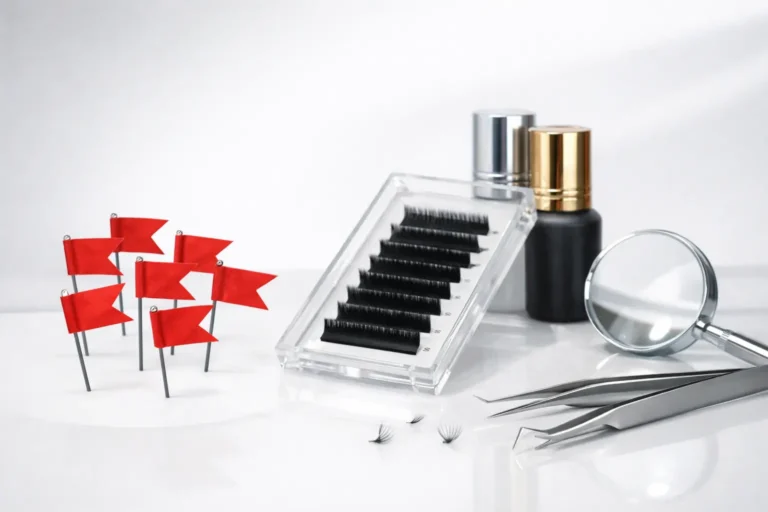
Identifying the most common red flags in a lash supplier is the single most important step to protect your new brand. The excitement of launching can quickly turn into a nightmare if you partner with the wrong manufacturer—a bad supplier can mean wasted money, a damaged brand reputation, and months of stress. This is a critical part of your overall eyelash brand launch process.
While it’s vital to know what to look for in a great partner—our guide with 20 questions to ask your manufacturer is the perfect place to start—it is equally crucial to recognize the warning signs of a poor one. This article is your defensive guide. We will cover the seven most common red flags to watch for when vetting potential lash suppliers and, more importantly, how to spot them early to protect your business.

Red Flag 1: Vague, Slow, or Unprofessional Communication
What it looks like: You send a detailed email with specific questions and receive a generic, copy-paste answer that ignores half of what you asked. Your follow-up questions take days to be answered, or are met with one-word replies. They are hesitant or outright refuse to participate in a brief video call to meet the team.
Why it’s a problem: Communication is a window into a company’s culture and operational efficiency. If a supplier is a poor communicator during the sales process—when they should be trying to win your business—it will only get worse once they have your money. This often signals a lack of customer care, disorganization, or a significant language barrier that will hinder a complex private label project.
Lashvee Experience: In our 15 years of working with brands, the most common complaint we hear from clients who switched to us from a bad lash manufacturer is, “They were great until I paid them, then they disappeared.” This is a classic sign of a supplier focused on transactions, not partnerships.
How to avoid it: Test their communication skills early and intentionally. Send a clear, multi-part question and see if they address every point. Note their response time. A professional supplier, like Lashvee, will typically respond within 24 hours and will welcome a video call to build trust and discuss your project in detail.

Red Flag 2: No Verifiable Certifications
What it looks like: The supplier’s website claims they are “ISO 9001 Certified” and “Cruelty-Free,” but when you ask for a copy of the certificate or a registration number, they evade the question or provide an expired document.
Why it’s a problem: Legitimate certifications are proof of a manufacturer’s commitment to international standards for quality, safety, and ethical practices. A refusal to provide them suggests they are either being dishonest or are operating without adhering to these critical standards. This puts your brand at risk of being associated with poor quality or unethical production.
Key Certifications to Ask For
- ISO 9001: This is the global standard for a Quality Management System (QMS). It proves the factory has repeatable processes to ensure consistent product quality.
- GMP (Good Manufacturing Practices): Crucial for cosmetics, this ensures the production environment is hygienic and controlled.
- Cruelty-Free: A declaration that no animal testing was performed. Ask for their registration with programs like PETA or Leaping Bunny.
How to avoid it: Don’t just take their word for it. Ask for the documentation. A legitimate, proud factory will have its ISO 9001 certificate, GMP certificate, and cruelty-free declarations ready to share. It is a simple request that speaks volumes about their transparency and is a simple request that speaks volumes about their transparency and is a key part of any serious lash supplier due diligence.
Red Flag 3: Unwillingness to Provide Samples (or Charging Excessively)
What it looks like: The supplier is hesitant to send physical samples before you place a bulk order. They might create long delays, claim it’s “not their policy,” or charge an exorbitant fee for the samples that is not credited back on a future order.
Why it’s a problem: This is one of the biggest red flags when vetting a lash supplier. It almost always means they are not confident in their own product quality. In some cases, it indicates they are a “trading company” (a middleman) and don’t have direct access to the products themselves, making it difficult and costly for them to procure samples.
How to avoid it: Insist on seeing and testing physical samples before committing to any bulk order. A reasonable fee to cover the cost of the samples and express shipping is normal. However, a professional manufacturer will often credit this sample fee back to you when you place your first official order. This is a standard practice and a sign of good faith.
Red Flag 4: Unusually Low Prices
What it looks like: You get quotes from five potential suppliers, and four are in a similar price range, but one is dramatically lower. The price seems “too good to be true.”
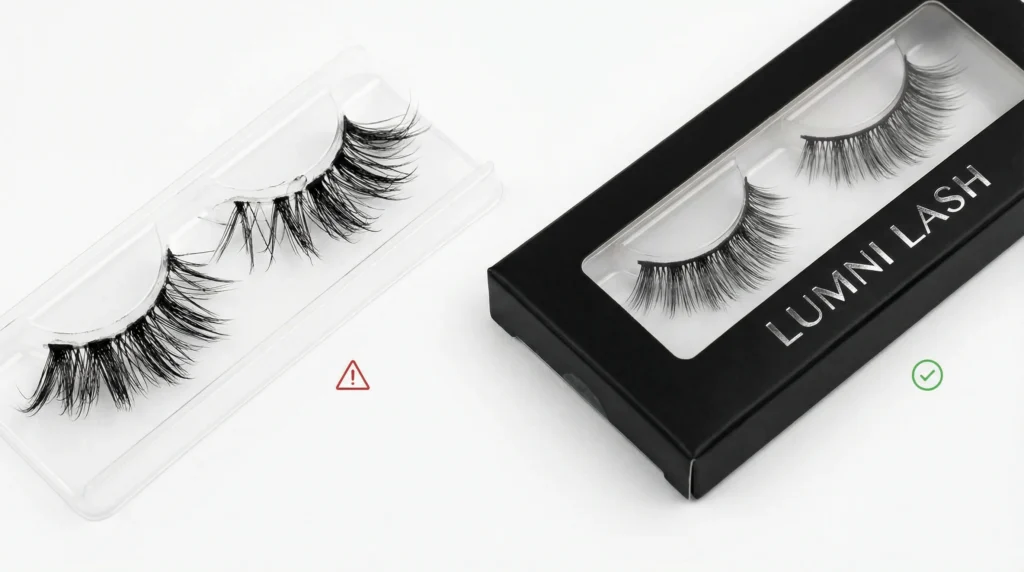
Why it’s a problem: It almost always is. In manufacturing, you get what you pay for. An extremely low price is a strong indicator that corners are being cut in critical areas. This often manifests in poor raw materials, such as using cheap, stiff plastic fibers instead of soft, flexible Korean PBT lash extensions, which leads to uncomfortable wear and poor curl retention. It can also signal unethical labor practices or a complete lack of quality control, where essential checks are skipped to save time and money, resulting in inconsistent and defective products reaching your customers.
How to avoid it: Do your due diligence. Get quotes from at least 3-5 different suppliers to establish a realistic market price. Be highly suspicious of any major outliers on the low end. Ask the low-cost supplier why their price is so much lower, and use the technical questions from our other guide to see if they can defend their quality. A reputable supplier will be able to justify their pricing with the quality of their materials and processes.
Red Flag 5: Lack of Specialization (Factory vs. Trading Company)
What it looks like: You land on their website or Alibaba page and see they produce a huge variety of completely unrelated products. One day they’re selling phone cases, the next day it’s t-shirts, and today they are selling eyelashes. They are a generalist, not a specialist.
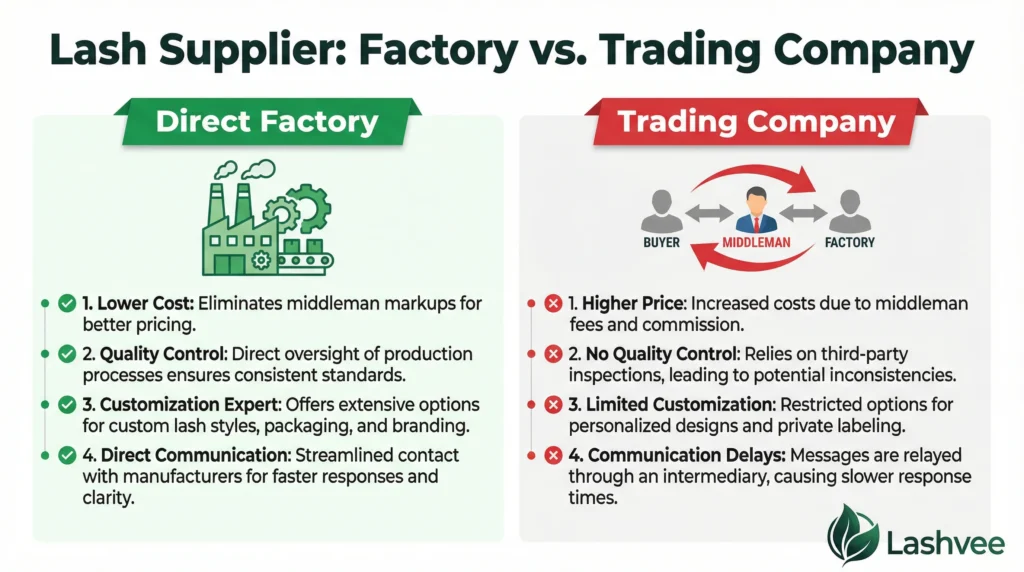
Why it’s a problem: This is a classic sign that you are dealing with a trading company, not a direct factory. Eyelash manufacturing is a highly skilled craft that requires specialized equipment, experienced technicians, and deep R&D knowledge. A general trading company that simply sources products from various factories lacks the expertise to control quality, ensure consistency, or help you innovate with custom designs.
How to Tell a Factory from a Trading Company
Distinguishing a true factory from a middleman is a crucial part of your lash factory audit. Here are a few tips:
- Check their Business License: Ask for a copy of their business license. The scope of business should explicitly state “manufacturing” or “production.”
- Ask for a Factory Tour: A real factory will be able to give you a live video tour of their production line, warehouse, and showroom. A trading company cannot.
- Examine their Product Range: A factory specializes. A trading company sells everything.
How to avoid it: Look for a clear focus. A professional manufacturer’s website and company profile will be dedicated to eyelashes and related accessories. Ask them specific, technical questions about the lash-making process. A true specialist will be able to answer with confidence and detail.
Red Flag 6: Vague or Non-Existent OEM/ODM Process
What it looks like: You ask about creating a custom lash style or unique packaging, and they don’t have a clear, structured process. They can’t explain the steps for design, prototyping, feedback, and mass production.
Why it’s a problem: This indicates a lack of experience with private label projects. A missing or chaotic process will lead to frustration, delays, and a final product that doesn’t match your vision. It’s a recipe for a failed launch.
How to avoid it: Ask them to walk you through their entire private label OEM/ODM process, from the initial idea to the final shipment. A professional partner like Lashvee will have a clear, step-by-step process that includes design consultation, digital mockups, physical sampling, and structured feedback loops.
Red Flag 7: High-Pressure Sales Tactics or Demanding 100% Upfront Payment
What it looks like: The salesperson is pushy, trying to get you to place a large order immediately with a “limited-time deal that expires today!” They also insist on a 100% upfront payment via wire transfer before any production begins.
Why it’s a problem: This creates immense and unnecessary risk for you. If you pay 100% upfront, you lose all leverage. If the final products are low-quality, the shipment is delayed, or they disappear entirely, your money is gone. It is an unprofessional and unbalanced business practice.
How to avoid it: A professional partnership is built on mutual trust, not pressure. The industry standard payment term for custom orders is a partial deposit (typically 30-50%) to start production, with the remaining balance due upon completion, often after you’ve approved final photos or a third-party inspection. Never agree to 100% upfront payment with a new, unvetted supplier.
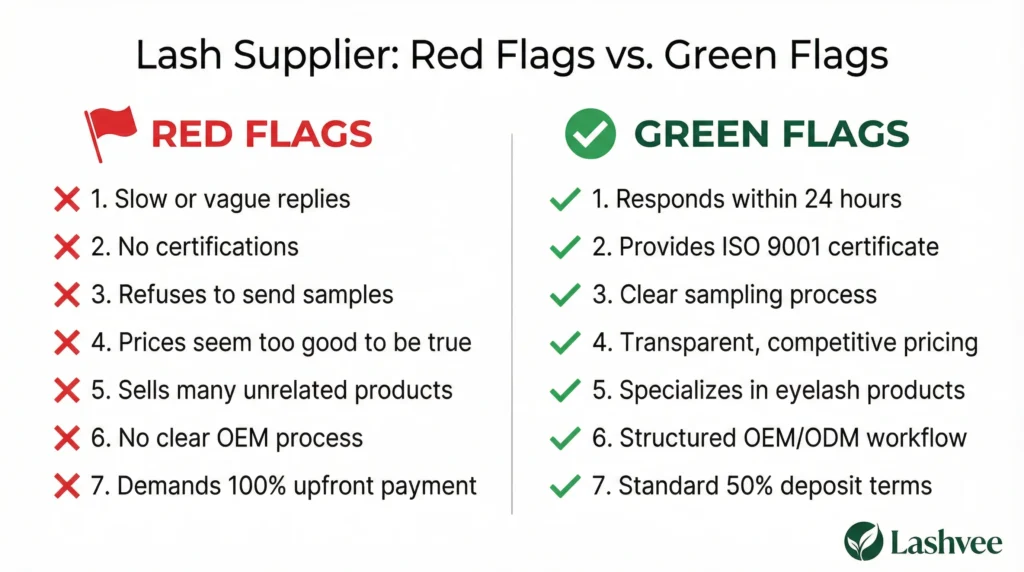
Quick Reference: Red Flags vs. Green Flags Checklist
Use this table as a quick reference during your supplier vetting process.
| Red Flag (Warning Sign) | Green Flag (Positive Sign) |
|---|---|
| Vague or Slow Communication | Clear, Professional & Fast Communication |
| No Verifiable Certifications | Provides ISO 9001 & GMP Certificates |
| Unwilling to Provide Samples | Has a Clear and Fair Sampling Process |
| Unusually Low Prices | Transparent, Value-Based Pricing |
| Sells Many Unrelated Products | Specializes Exclusively in Eyelashes |
| No Clear OEM/ODM Process | Has a Structured Private Label Workflow |
| Demands 100% Upfront Payment | Standard 30-50% Deposit Terms |
Conclusion: Choose a Partner with Only Green Flags
Choosing the right manufacturing partner is a foundational step in building a successful and sustainable lash brand. While the allure of a low price or a quick start can be tempting, the long-term health of your business depends on finding a supplier who is reliable, professional, and transparent. By learning to spot these seven red flags, you can avoid costly mistakes and protect your brand from the stress and financial loss of a bad partnership.
At Lashvee, we are proud to represent the “green flags.” We are a specialized, ISO 9001-certified eyelash factory committed to transparent communication, a clear sampling process, and a structured OEM/ODM workflow designed to bring your vision to life. We believe in building long-term partnerships based on trust and quality.
If you are looking for a reliable manufacturing partner to help you launch or scale your lash brand, we invite you to get in touch with our expert team. We are ready to answer your questions and show you the difference a professional partnership can make.
Frequently Asked Questions
1. Is it always a red flag if a supplier is on Alibaba?
Not necessarily. Alibaba is a massive platform with both excellent, legitimate manufacturers and a large number of low-quality trading companies and scammers. The platform itself is not the red flag; the red flag is a supplier on the platform who exhibits the warning signs discussed in this article. Use Alibaba as a starting point for discovery, but then apply this vetting process rigorously to every potential supplier you find there.
2. What should I do if I’ve already paid a deposit to a supplier and am now seeing red flags?
This is a difficult situation. First, communicate your concerns clearly and professionally to the supplier, referencing your initial agreements. If they are unresponsive or unwilling to resolve the issues, you may need to consider it a sunk cost and walk away to prevent further losses. It is better to lose a deposit than to receive an entire shipment of unsellable, low-quality goods. For future orders, always use a more secure payment method like Alibaba Trade Assurance or a credit card if possible.
3. How can I verify a supplier’s certifications?
For ISO certifications, you can ask for the certificate number and the name of the accredited body that issued it. You can often verify this on the certification body’s website. For cruelty-free claims, check the official databases of recognized organizations like PETA or Leaping Bunny. A legitimate supplier should have no issue providing this information for verification.
4. What is a reasonable price for eyelash extension samples?
A reasonable price is typically the cost of the products themselves plus the cost of express shipping (e.g., via DHL or FedEx), which can range from $30 to $80 depending on your location. Be wary of suppliers charging hundreds of dollars for a small sample pack. A good supplier is investing in you as a potential partner and will keep sample costs fair.
5. What is the difference between a factory audit and a quality inspection?
A factory audit is a comprehensive evaluation of the supplier’s entire operation, including their quality management systems, social compliance, and production capacity. It happens before you decide to work with them. A quality inspection (or QC check) is a review of the actual products you have ordered to ensure they meet your specifications. This can happen during production or, more commonly, before the final payment and shipment.
References
[1] U.S. Federal Bureau of Investigation (FBI). (n.d.). Common Scams and Frauds. Retrieved from https://www.fbi.gov/how-we-can-help-you/scams-and-safety/common-frauds-and-scams
[2] J.P. Morgan. (2023, October 23). 10 Tips to Vet Potential Vendors & Suppliers. Retrieved from https://www.jpmorgan.com/insights/business-planning/ten-tips-to-vet-potential-vendors-and-suppliers
[3] International Trade Administration. (n.d.). Due Diligence on Foreign Partners. Retrieved from https://www.trade.gov/perform-due-diligence-foreign-partners